
The International Society for Equitation Science Research Highlights Page
This Research Highlights page showcases selected studies in equitation science, chosen for their relevance to training, management, and horse welfare. Papers are uploaded frequently. We hope you find them both interesting and useful.
Our members are also discussing these papers in the ISES community, a supportive space for like-minded individuals who value evidence-based equitation. Become a member to join the conversation.
If you’ve recently published equitation science-related research you’d like us to share, or know someone who has, please email [email protected]
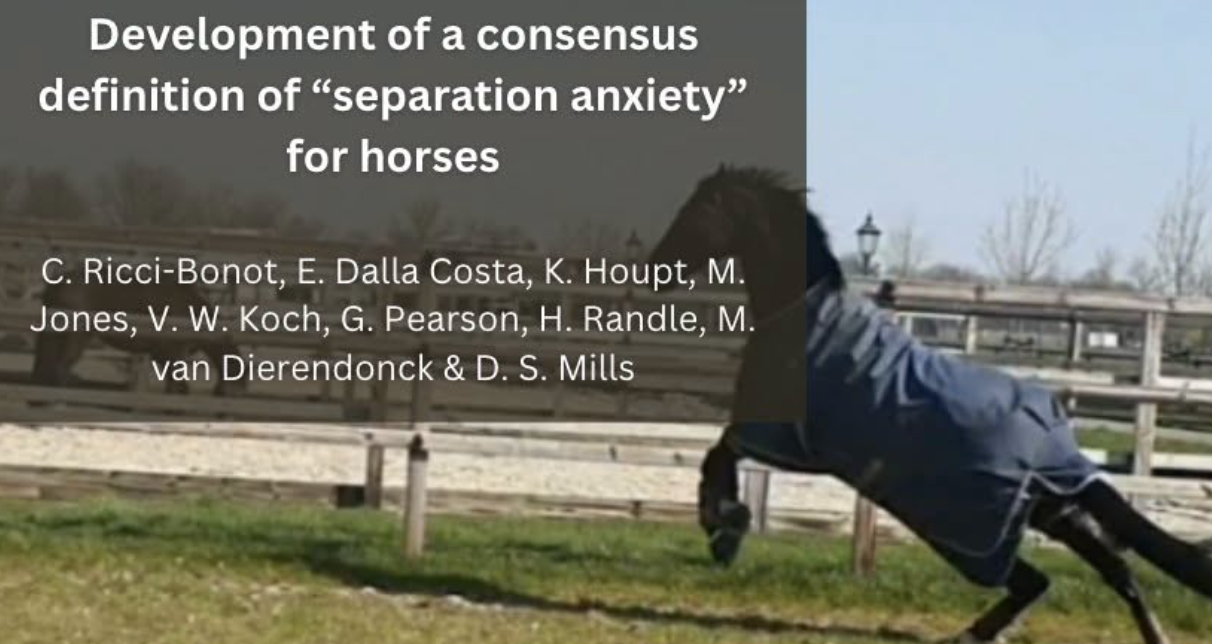
Development of a consensus definition of “separation anxiety” for horses
Understanding Separation Distress in Horses
Horses are frequently separated from other horses during everyday management, including transport, training, veterinary treatment, and competition. However, because horses are highly social animals that naturally form strong social bonds, separation can be stressful for some individuals.
Distress may occur not only when a horse is completely isolated, but also when they are separated from a particular companion to whom they are closely bonded, even if other horses remain nearby.
This study aimed to better understand what is commonly described as “separation anxiety” in horses and to develop a clearer definition of the condition for future research. Researchers gathered the opinions of horse owners and caregivers about situations in which horses showed distress during separation.
The responses were analysed to identify common themes, situations, and behavioural signs associated with separation-related distress. These findings were then reviewed through an expert consensus exercise involving equine behaviour specialists.
The study identified eight different contexts in which separation-related distress may occur. These varied depending on whether the horse was leaving the group or being left behind, and at which stage the separation occurred, such as during preparation to leave, while actively separating, when visual or physical contact was first restricted, or after contact had been completely lost.
A range of behavioural responses associated with separation distress were identified, including increased movement, vocalisation, hypervigilance, agitation, and, in some cases, more withdrawn or apathetic behaviours.
The authors proposed a theoretical model to better explain the phenomenon commonly referred to as “separation anxiety” in horses and suggested that future research should further investigate its causes, behavioural expression, and implications for horse welfare and management.
This study may be limited by sampling bias, as respondents and experts were almost exclusively female and participants may have been more likely to engage if they had observed signs of separation anxiety in their horses.
You can read this paper here.

The Five Domains Model Has Been Updated
The Five Domains Model is one of the most widely used frameworks for assessing and improving animal welfare. In this paper, the authors propose updates to the accompanying Five Provisions framework to make it clearer and more practical for those caring for animals.
The changes include emphasising animals' opportunities to make choices, clarifying the importance of providing an appropriate living space, and introducing the concept of "Integrated Care" to reflect the need for consistent, welfare-focused management across all aspects of an animal's life.
The paper also explains the important difference between assessing an animal's welfare and planning the care needed to support good welfare.
The authors suggest these updates will improve how welfare is communicated, assessed, and applied in practice, as well as helping to inform future policy and legislation.
You can read this paper here.
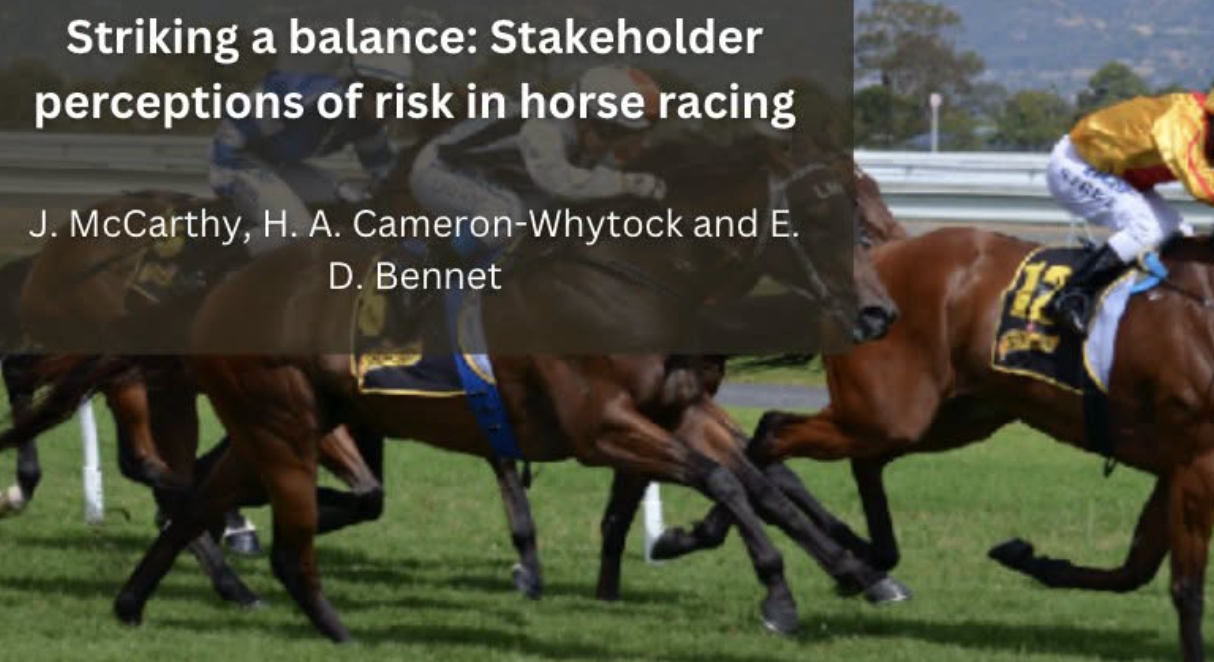
Striking a balance: Stakeholder perceptions of risk in horse racing
Race Day Risk: Balancing Welfare, Tradition, and Public Trust
Thoroughbred racing faces increasing public scrutiny regarding equine injuries and fatalities, challenging the industry’s social licence to operate. This qualitative study explored how key stakeholders within UK and Irish racing perceive and manage race day risk to horses.
Semi-structured interviews were conducted with veterinarians, media professionals and regulatory stakeholders, with data analysed using reflexive thematic analysis.
Participants acknowledged race day risk as an inherent part of racing, although views differed regarding how avoidable such risks are and whether concerns stem primarily from welfare issues or public misunderstanding.
Three themes were identified: managing risk versus managing public perception, balancing tradition with welfare progress, and attributing responsibility for race day incidents.
Stakeholders described racing as deeply rooted in tradition and sometimes resistant to change, despite widespread support for improving equine safety. Internal divisions, differing perceptions of acceptable risk, and a growing disconnect between industry insiders and the public were also highlighted.
Overall, the findings suggest that race day risk perception is shaped not only by welfare concerns, but also by culture, lived experience, communication and public expectations, highlighting the need for greater collaboration and proactive welfare engagement to support the future sustainability of the racing industry.
A limitation of this study is that there were only 12 interviews conducted and familiarity between the researcher and some participants may have influenced how responses were framed during interviews.
You can read this paper here.
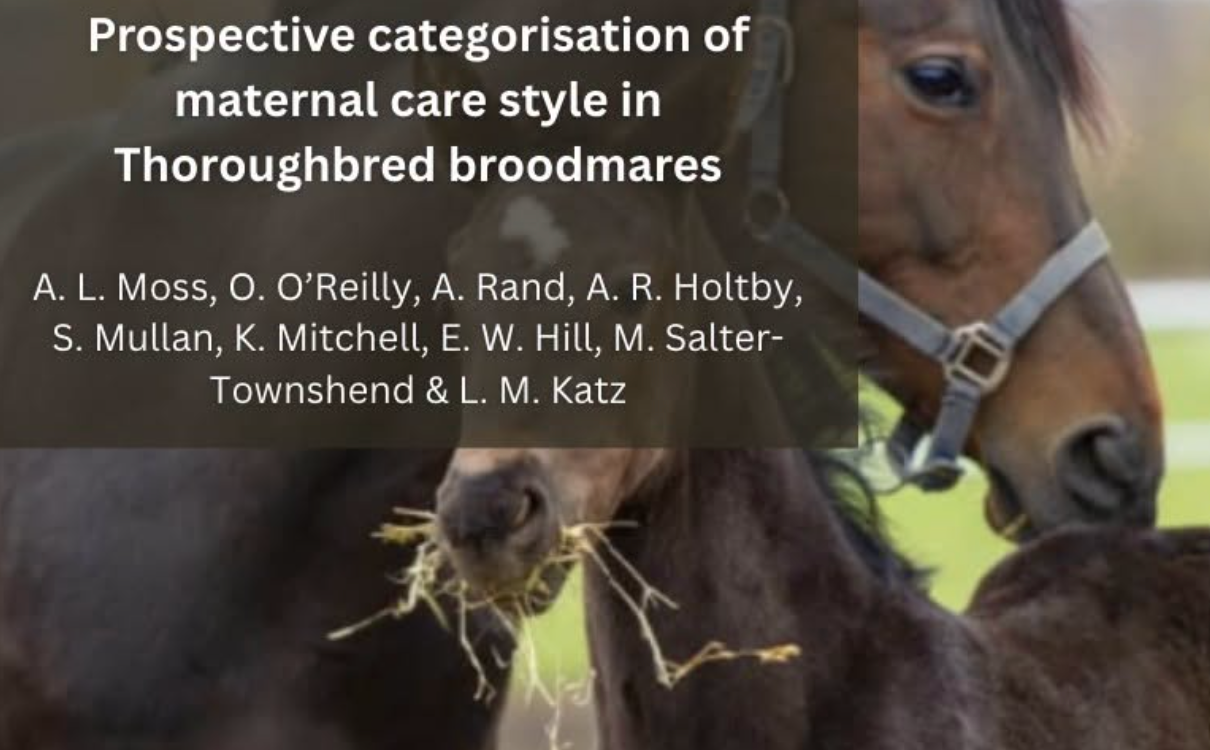
Prospective categorisation of maternal care style in Thoroughbred broodmares
How a Mare's Parenting Style May Shape Her Foal's Future
Maternal care style has long-term effects on how young animals respond to stress and develop behaviourally later in life. In both humans and rodents, poor early maternal care has been linked to lasting changes in stress regulation and brain development.
In horses, maternal care during the first weeks after birth is especially important, as foals rely heavily on their mothers for protection, nursing, and social development. However, there has previously been no well-validated system for assessing maternal care style in horses.
This study aimed to develop and validate a method for identifying different maternal care styles in Thoroughbred mares during the first two weeks after foaling. Thirty-six broodmares were observed, with researchers analysing mare–foal interactions using both detailed behavioural recordings and qualitative behavioural assessments from video footage.
The mares also took part in behavioural tests designed to assess maternal bonding and fearfulness, including brief separation from the foal and exposure to a novel object. Physiological measures such as salivary cortisol and heart rate variability were also recorded.
The study identified two distinct maternal care style phenotypes, described as higher and lower maternal care styles. Mares showing higher maternal care were more likely to remain close to their foals, support successful nursing, and display calmer, less fearful behaviour.
The behavioural assessments strongly aligned with the maternal bond and fearfulness tests, suggesting the system reliably captured meaningful differences in maternal care. These findings demonstrate that maternal care style in Thoroughbred mares can be robustly assessed during early life.
The authors suggest this could help future research investigate how early maternal care influences foal stress responses, behaviour, and welfare later in life, with the longer-term aim of improving equine welfare and reducing stress-related problems through better management of the early-life environment.
Limitations of this study include constraints in data acquisition, particularly the single post-test salivary cortisol sample and variability in some heart rate variability measures during the novel object test, which may have limited detection of physiological differences between maternal care style phenotypes.
You can read this paper here.
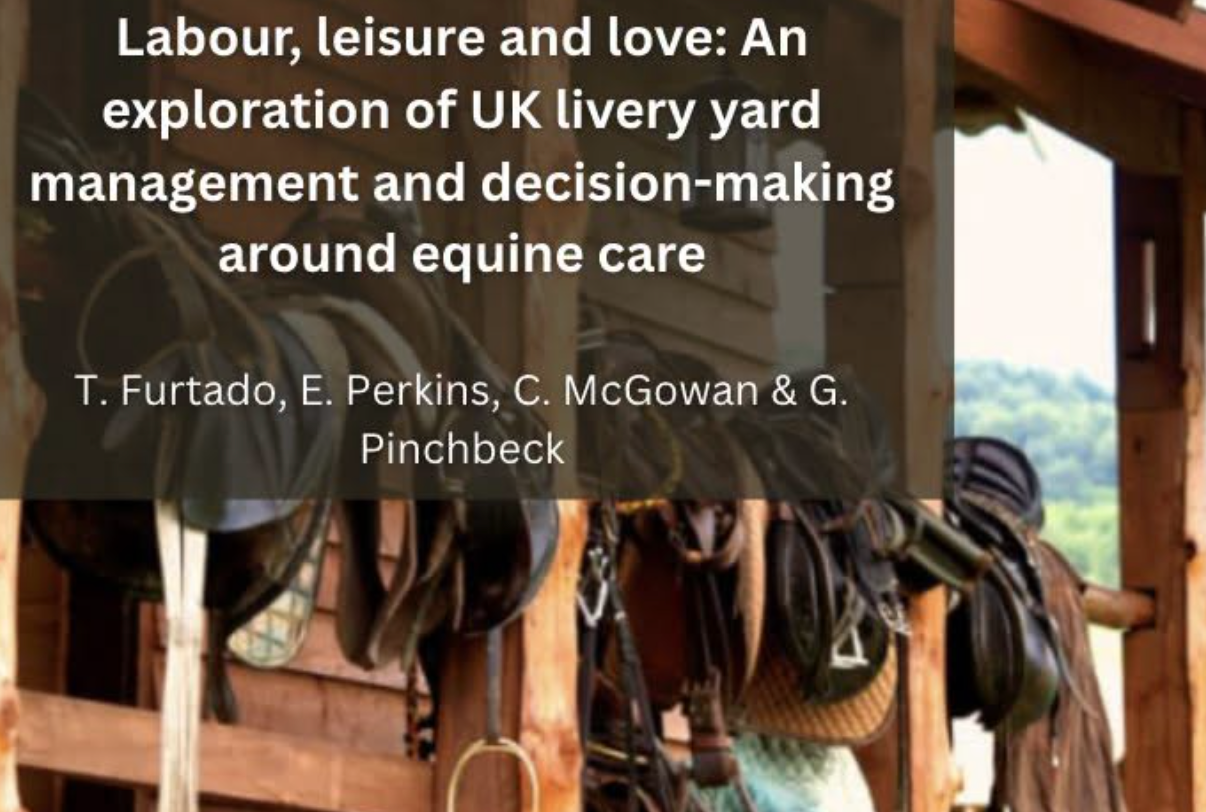
Labour, leisure and love: An exploration of UK livery yard management and decision-making around equine care
The Hidden Responsibilities of Livery Yard Managers
This study explored the experiences of livery yard owners and managers in the United Kingdom, recognising their central role in shaping the daily lives and welfare of horses kept on livery yards.
Although over 60% of UK horses are kept at livery, relatively little research has examined how these yards are managed or how decisions affecting horse wellbeing are made within the practical realities of running an equestrian business.
Using qualitative methods, the study drew on 52 semi-structured interviews with yard managers from more than 45 diverse yards, two focus groups, and 20 online forum discussion threads. Data were analysed using constructivist grounded theory.
The findings highlight that each livery yard operates as a unique ecosystem, shaped by the interaction of horse management, client management, land management, business organisation, facilities, workload, and the personal wellbeing of the yard owner or manager.
Although livery yards are visibly organised around the physical care of horses, such as feeding, mucking out, turnout, and land maintenance, participants described the most complex and demanding aspects of their role as organisational and emotional.
This included managing client expectations, negotiating disagreements, balancing individual horse needs against whole-yard requirements, supporting clients through difficult decisions, and intervening in welfare concerns.
The study shows that livery yard owners and managers often play an under-recognised protective role in equine welfare. Their work may include overseeing preventive healthcare, managing neglect, mediating between vets and owners, supporting euthanasia decisions, and maintaining standards of care across the yard.
However, this work is often poorly supported, emotionally demanding, and financially undervalued. The authors conclude that improving equine welfare on livery yards requires greater recognition of the hidden physical, cognitive, and emotional labour involved in yard management, and more collaborative support for livery yard owners and managers.
This study explored livery yard owners’ and managers’ perspectives only and did not include the views of clients or direct assessment of horse welfare, while participants may also have been more engaged or welfare-motivated than the wider livery yard population.
You can read this paper here.
Human emotional odours influence horses’ behaviour and physiology
Can Horses Smell Human Fear?
Olfaction, or the sense of smell, is one of the most important ways animals communicate, yet its role in emotional communication between different species remains poorly understood.
While previous research has mainly focused on communication between members of the same species, growing evidence suggests that odours may also influence interactions between humans and animals.
This study investigated whether horses respond differently to human odours associated with different emotional states. Cotton pads carrying human scent collected during fear-inducing or joyful situations, as well as unused control pads, were presented to 43 horses during a series of behavioural tests, including suddenness, novelty, grooming, and human approach tests.
The results showed that horses exposed to fear-related human odours displayed stronger fear responses and were less willing to interact with humans compared to horses exposed to joyful or control odours.
Specifically, horses exposed to fear odours touched humans less during approach tests, paid more attention to novel objects, and showed stronger startle responses, including increased heart rate, during sudden events.
These findings suggest that horses can detect and respond to emotional information carried in human body odours. The study highlights the importance of chemosignals in human–horse interactions and suggests that a handler’s emotional state may influence horses in subtle but measurable ways.
This may have important implications for training, handling, and welfare, particularly in situations where horses are exposed to stressed or anxious humans.
Limitations of this study include the restricted sample population, potential influence of the audience horse during testing, and variability in physiological measures such as cortisol and heart rate data, which may limit the strength and generalisability of the findings.
Toward a diagnostic framework for the equine depressive phenotype: A narrative review
Can Horses Experience Depression?
This narrative review examines the evidence for depression-like states in horses and explores how such states might be objectively identified.
Drawing on human diagnostic frameworks and animal models of depression, the authors evaluate behavioural, cognitive, and physiological indicators that could signal a depressive phenotype in horses.
Across species, depression is typically identified through the co-occurrence of multiple indicators, rather than any single measure.
Based on this principle, the review proposes a multi-indicator framework that includes markers such as inactivity, reduced responsiveness, anhedonia (loss of interest in rewarding activities), altered sleep patterns, and reduced cognitive attention.
The authors suggest that identifying consistent patterns across these indicators could provide a foundation for diagnosing depressive-like states in horses and improving welfare assessment.
Establishing baseline thresholds and validating these indicators across horse populations are highlighted as key priorities for future research.
Many proposed indicators of equine depression remain unvalidated in horses, and baseline thresholds and practical diagnostic protocols have yet to be established. We cannot guarantee that these depression-like states are direct analogues for human depression, as human cases have daignostic criteria that relies on specific thought patterns we are unable to validate in horses.
Words matter: The prevalence and impact of negative emotive language in the equine industry
Words Matter: How the Language We Use Shapes Horse Welfare
This study investigated the prevalence and potential consequences of negative emotive language used to describe unwanted equine behaviour.
An online survey of 355 UK-based participants with at least five years’ horse experience asked respondents to report negative emotive language they had heard and used, and to respond to paired video-vignette scenarios in which the same equine behaviour was described using either neutral language or negative emotive language.
All participants reported hearing negative emotive language used to describe horses, and 97% reported using such language themselves, suggesting that this language is widespread within the equine industry.
The use of negative emotive language in vignettes significantly influenced participants’ proposed responses to unwanted behaviour. Participants exposed to negative emotive language were more likely to suggest sedation and, in some scenarios, positive punishment, while being less likely to consider possible physical discomfort.
Participants who self-reported using negative emotive language more frequently were also more likely to suggest positive punishment and less likely to propose giving the horse time, considering the horse’s emotional state or physical discomfort, or using desensitisation.
These findings suggest that language may shape how people interpret and respond to equine behaviour, potentially encouraging aversive or restrictive approaches rather than consideration of fear, frustration, pain, or learning history.
Overall, the study concludes that negative emotive language is common in equestrian contexts and may negatively affect horse-human interactions and equine welfare.
The authors highlight the importance of more careful, neutral language when describing horse behaviour, particularly within veterinary and training contexts, to support more welfare-conscious decision-making.
This study relied on a self-selected online sample from the United Kingdom and vignette-based responses, which may not fully reflect wider equestrian populations or participants’ real-life behavioural responses to challenging equine situations.
You can read this paper here.
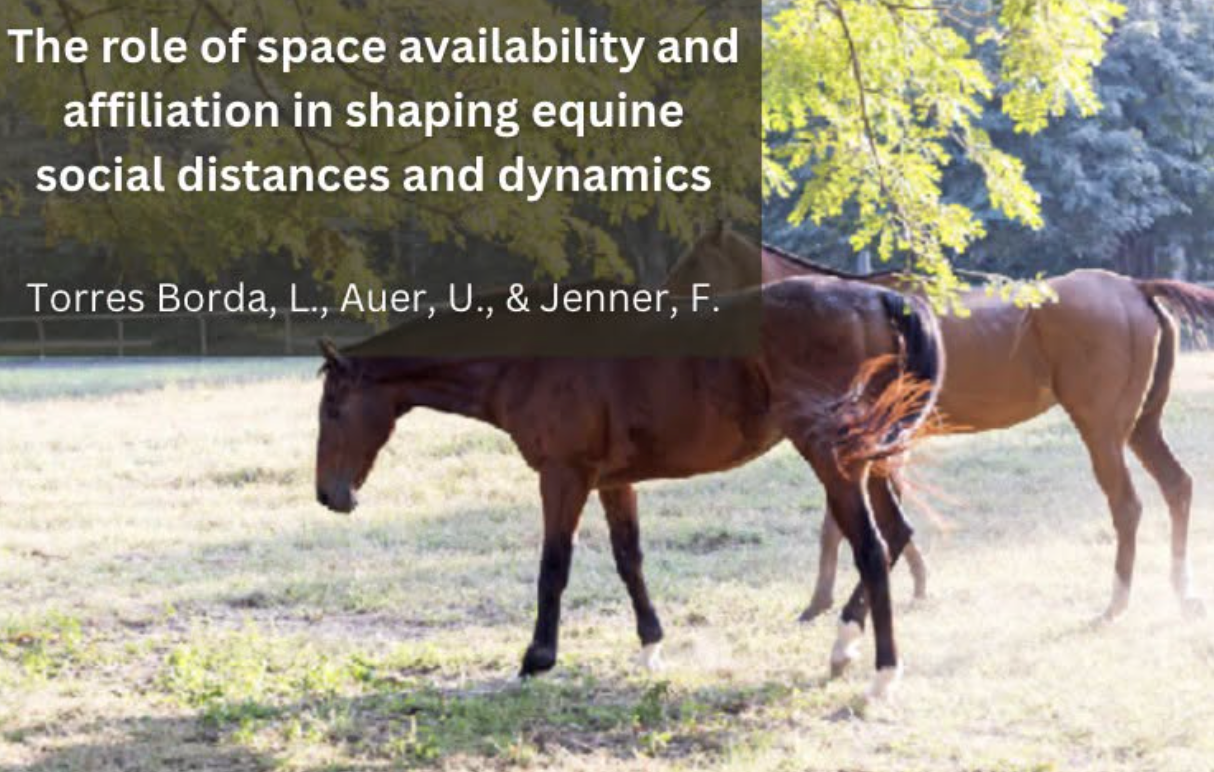
The role of space availability and affiliation in shaping equine social distances and dynamics
Close...But Not Too Close: How Space Shapes Social Behaviour in Horses
Horses confined to enclosures with limited opportunities for spatial avoidance and escape experience heightened social stress and conflict. While forced proximity can pose welfare risks, voluntary social proximity is considered a positive indicator of well-being.
To investigate how space availability affects social interactions, this study used ultra-wideband sensors to continuously measure the distances between 34 horses in three groups during turnout in more confined paddocks and larger grazing fields.
Horses were further apart in larger enclosures (paddock: 8.3 m, field: 19 m), but close associates still stayed nearer to each other than to other horses and spent more time within 3 m. Even in larger spaces, horses did not spread out as far as possible, remaining within range of most group members, suggesting a limit to how far individuals separate while maintaining group cohesion.
Social network analysis showed a more tightly connected network in paddocks. Agonistic interactions (such as threats, chasing, or aggression) were more common between close associates, occurred more often in paddocks than in fields, and decreased as distance between horses increased.
These findings highlight how space availability influences social dynamics and has important implications for equine welfare.
The study was limited by the relatively older age of the horses, the use of only one sensor per horse (which prevented determining body orientation during interactions), and the inability of proximity data alone to distinguish specific behaviours within affiliative (friendly or bonding social interactions) or agonistic categories.
You can read this paper here.
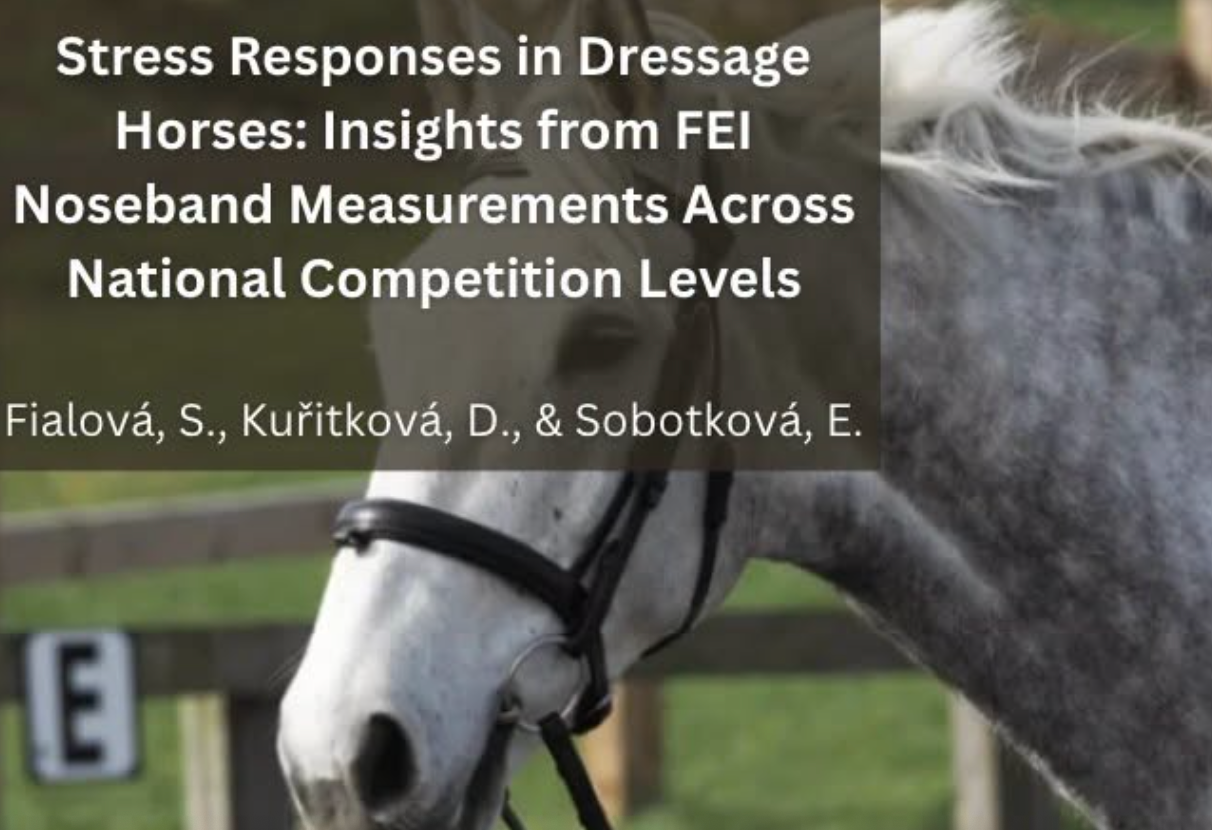
Stress Responses in Dressage Horses: Insights from FEI Noseband Measurements Across National Competition Levels
Does Dressage Difficulty Influence Behavioural Expression?
This pilot study observed 238 dressage horse–rider combinations competing from Elementary to Grand Prix to examine stress-associated behaviours. Noseband tightness was measured at the event using the FEI noseband measuring device, and nearly all horses complied with FEI rules.
Video analysis recorded behaviours such as mouth opening, tail swishing, and changes in head and neck position. Because noseband tightness varied very little between horses, no meaningful relationship with behaviour could be identified. However, competition level influenced behaviour: horses at lower levels showed a wider range of behaviours at low frequency, while horses at higher levels showed fewer behaviour types but performed them more frequently, with mouth opening becoming the most common sign.
Horses ridden in a double bridle generally showed more behavioural responses than those ridden in a snaffle. At the lowest competition levels, higher levels of behavioural responses were linked with lower judging scores, but this relationship disappeared from Medium level upward.
Overall, the results suggest that as dressage tests become more difficult, stress-associated behaviours increase and become more concentrated in specific behaviours.
The study was limited by minimal variation in noseband tightness, small sample sizes at higher competition levels, and the influence of external factors such as training, management, and competition environment that could not be controlled, making it difficult to isolate the causes of the observed behaviours.
Owner-reported breed differences in the behaviour of ridden horses
What Makes a ‘Good Riding Horse’? Insights Across Breeds
Domestic horses are often chosen for certain activities based on perceived breed-related behaviour traits, many of which relate to safety when riding.
This study investigated whether ridden behaviour differs between breeds using owner reports from the Equine Behaviour Assessment and Research Questionnaire (E-BARQ).
From over 8,000 responses in the database, reports on 1,635 purebred horses that had been ridden within the previous six months were analysed. Fourteen behaviour traits were examined, including trainability, ease of riding and handling, boldness, willingness to load, tolerance of isolation, and repetitive behaviours.
The results showed clear behavioural differences between breeds in most of these traits, with repetitive behaviours showing the greatest variation, while ease of handling and boldness around non-human stimuli did not differ between breeds. Some traits tended to appear together, such as being safe to ride, easy to stop, and unlikely to stall, which are all important qualities for riding horses.
The findings suggest that comparing an individual horse’s behaviour with typical patterns seen in its breed may help trainers and riders adjust management and training approaches to better suit each horse.
Examples of breed patterns reported in the study:
-
Icelandic horses were rated highest for several ridden traits, including being safe to ride, easy to ride, easy to stop, and confident around novel objects.
-
Swedish Warmbloods and Arabians were reported as most trainable, while Thoroughbreds were rated lowest for trainability.
-
Quarter Horses were reported as the boldest breed and also showed high tolerance of isolation.
-
Icelandic horses were reported as the most confident around unfamiliar objects, while Arabians and Standardbreds were among the least confident.
-
Welsh Cobs showed the fewest repetitive behaviours, whereas Dutch Warmbloods showed the most.
-
Thoroughbreds were rated lowest for several ridden traits, including ease of riding and tolerance of isolation.
The study relied on owner-reported survey data and included only certain breeds with enough responses, meaning the results may be influenced by reporting bias and may not represent all horse populations or management contexts.
The teleonome: a framework for understanding animal welfare integrating adaptive capabilities, affective regulation, agency, and environmental affordances
What Matters to Animals? A New Framework for Welfare
This paper introduces the concept of the "teleonome", being the integrated biological system that helps animals survive and adapt to their world. It brings together perception, physiology, behaviour and affective experiences (how animals feel) to explain how animals recognise what matters, prioritise competing needs, and adjust their behaviour over time.
Rather than defining what welfare should be, the teleonome provides a framework for understanding why feelings matter: they help animals learn, make decisions and maintain wellbeing in changing environments.
By understanding species-specific needs alongside animals’ affective experiences, this approach aims to strengthen welfare assessment, research and ethical decision-making, reconnecting welfare science with the lived experience of animals.
The Equine Quality of Movement Score: How reliable is it?
Same horse, different scores...how reliable is movement assessment?
Visually assessing a horse’s quality of movement is a routine part of performance and rehabilitation, but it is inherently subjective. The Equine Quality of Movement Score (EQoMS) was developed to add structure, using 30 standardised in-hand tests with both numerical and descriptive scoring.
Six assessors (equine physiotherapists and specialist veterinarians) scored 20 horses from video footage across two rounds, two weeks apart.
Assessors were highly consistent in their own scoring over time (excellent intra-rater reliability). Between assessors, agreement was moderately strong when ranking horses, meaning they generally agreed on which horses moved better or worse. However, they disagreed on how good or poor that movement actually was, with some horses receiving a wide range of scores despite similar written comments.
Free-text comments showed a tendency to focus on negative aspects of movement. Different features were highlighted depending on gait, movement, and surface, and terminology varied between professions, with physiotherapists less likely to explicitly refer to lameness.
Overall, the EQoMS shows strong reliability within the same assessor, but less consistency between different assessors, highlighting the subjective nature of movement evaluation. Further refinement is needed to improve agreement and reliability.
The study was limited by a small sample size, video-based assessments rather than live observation, and the use of horses that may not represent the wider population.
You can read this paper here: https://www.sciencedirect.com/science/article/pii/S2949905425000052
Why equestrians use auxiliary reins on horses, their biomechanical perceptions, and barriers to human behaviour change
Why do riders use auxiliary reins? Science vs belief
Auxiliary reins, such as draw reins or side reins, are commonly employed by equestrians but may raise concerns for horse welfare. This study investigated behavioural factors underpinning the use of auxiliary reins and whether equestrians understand their biomechanical function.
A survey of 14–24 questions was circulated online through equestrian magazines and social media, collecting information on demographics, biomechanical knowledge, and behavioural factors relating to the use of auxiliary reins.
There were 570 responses from equestrians worldwide, with 344 respondents (60.4%) indicating that they had used or would use auxiliary reins. Results were coompared between riders who use auxiliary reins and those who do not.
Participation in equestrian competition was associated with the use of auxiliary reins. Equestrians who currently used or would use auxiliary reins tended to have lower biomechanical knowledge scores than those who no longer used them.
Open text responses were analysed, guided by the Behaviour Change Wheel framework, which examines the capability, opportunity, and motivation factors influencing behaviour. Most reported changes in a horse’s "way of going" in response to auxiliary reins were not supported by scientific evidence.
Social influence from people within an equestrian’s immediate environment and a lack of physical riding or training skills were identified as primary drivers for beginning to use auxiliary reins. Once these behaviours were established, perceived horse characteristics and a lack of rider ability were the most prominent barriers to reducing their use.
The results may have been influenced by response bias, the non-random sampling method, survey questions that assumed current use of auxiliary reins, and the use of a newly developed but unvalidated illustrated test to assess riders’ biomechanical knowledge.
You can read this paper here: https://www.sciencedirect.com/science/article/pii/S2949905425000143
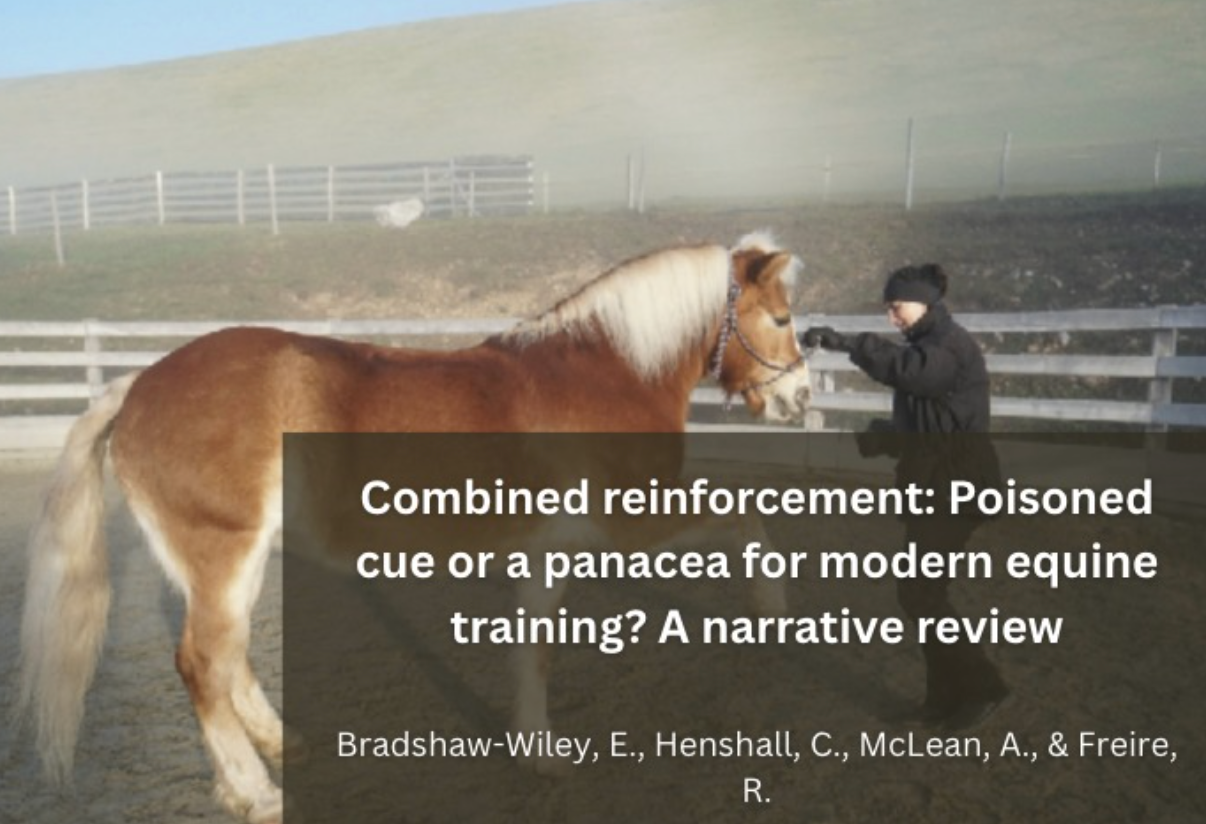
Combined reinforcement: Poisoned cue or a panacea for modern equine training? A narrative review
Balancing pressure and reward...should we rethink reinforcement in horse training?
Equine industry stakeholders have raised concerns about training practices that may affect the welfare of domestic horses. Many common training methods are based on tradition and may not always align with current understanding of equine behaviour, cognition, and natural needs.
At a time when equestrianism’s social licence is under increasing scrutiny, it is important to review what is known about behaviour modification in horses and identify gaps in the evidence.
Unlike training in many other animal species, horse training largely relies on negative reinforcement (NR), where a behaviour increases because an aversive stimulus (such as pressure) is removed. In practice, this typically involves pressure-release cues, where pressure is applied and released when the horse performs the desired behaviour.
Positive reinforcement (PR), where a desirable stimulus is added to increase the likelihood of a behaviour occurring again, offers several advantages in animal training. This has led to interest in whether combining PR and NR could offer the benefits of reward-based training while still accommodating the practical realities of riding.
This review examines the current evidence on combined reinforcement in horse training and compares it with approaches based solely on positive or negative reinforcement.
The authors highlight inconsistencies in how different types of reinforcement are described in the literature. In some cases, studies described as using positive reinforcement also include elements of negative reinforcement, which can make results difficult to interpret.
As a result, understanding of combined reinforcement remains limited, and further research is needed to clarify how reward-based approaches can be effectively incorporated into horse training, including during ridden work.
A key limitation is the small and inconsistent evidence base, with limited equine-specific studies.
You can read this paper here: https://www.sciencedirect.com/science/article/pii/S0168159125002163
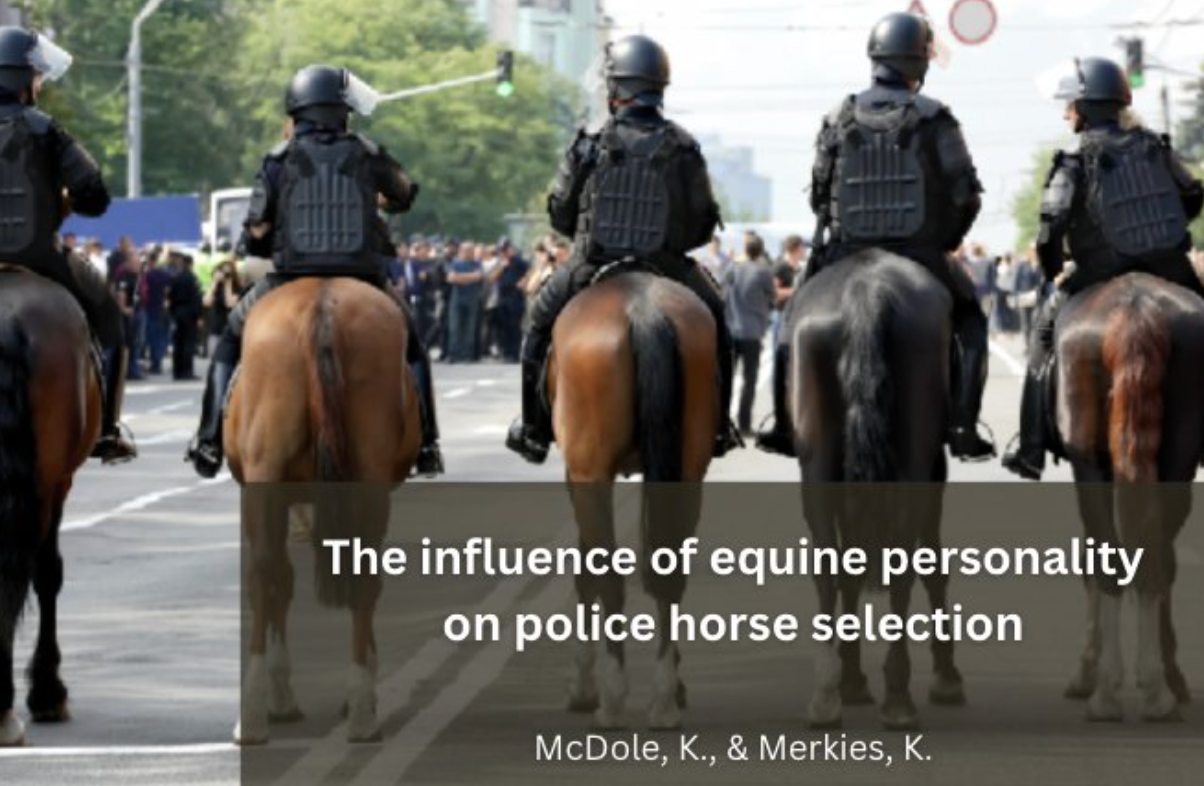
The influence of equine personality on police horse selection
What makes a police horse? Personality traits behind the badge
Mounted police horses are used to patrol urban environments and carry out duties such as crowd and riot control. Selecting horses for this work requires consideration of both physical ability and temperament, as personality traits influence how well a horse can learn, work and interact with humans.
Horse personality is commonly described using four dimensions: Extroversion (boldness and willingness to engage with new situations), Neuroticism (tendency to be anxious or reactive), Gregariousness (sociability with horses or humans), and Agreeableness (cooperativeness and ease of handling). Each of these dimsensions includes both positive and negative traits.
This study evaluated personality traits in mounted police horses using 129 responses from a 16-item online survey. The survey examined the traits present in current police mounts, traits considered desirable in police horses, and traits viewed as unacceptable in potential future mounts.
The results showed that current police horses displayed the same personality dimensions considered important for police work: positive Gregariousness, positive Extroversion, positive Agreeableness and low (negative) Neuroticism.
Most current mounts did not show any of the five most commonly identified dealbreaker traits (Aggressive, Fearful, Uncooperative, Nervous and Unreliable). Current mounts typically possessed the traits considered important (Confident, Trusting, Willing and Reliable) although Calm appeared less frequently than expected.
The primary role of the horse influenced which traits respondents considered dealbreakers, with Fearful viewed as more undesirable in horses used for neighbourhood patrol and park or wilderness patrol.
However, traits considered important were consistent regardless of the horse’s primary role. Breed and sex generally did not influence the traits reported in current mounts, although draft crosses were described as less approachable than other breeds and geldings were reported as bolder than mares.
These findings provide insight into the personality traits valued by mounted police officers and may help support the development of police horse testing protocols, potentially improving the selection of suitable police horse candidates.
Survey responses may have been influenced by recent rider–horse interactions and differing interpretations of personality trait terms, particularly without provided definitions and for respondents whose first language was not English.
You can read this paper here: https://www.sciencedirect.com/science/article/pii/S0168159126000146
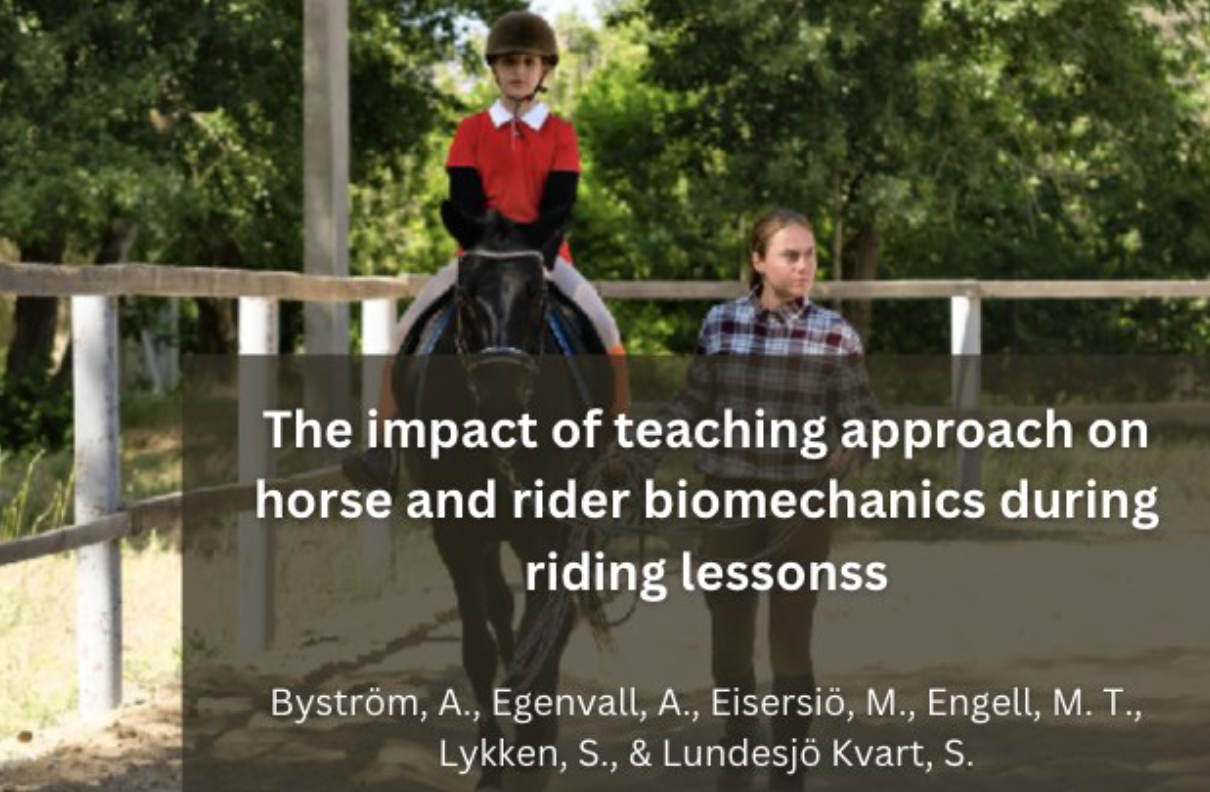
The impact of teaching approach on horse and rider biomechanics during riding lessons
How riding instruction influences horse movement and rein tension
Riding relies heavily on practical, embodied knowledge and is usually taught through riding lessons. This study investigated how different riding instructions from teachers influence horse and rider movement, as well as rein tension during walk–trot transitions.
Two Swedish and two Norwegian riding teachers each taught groups of riders, with five riders at each location. Each rider rode two horses, resulting in 40 lessons being analysed. Video recordings, measurements of horse and rider movement, and rein tension data were collected, while teacher–student interactions were analysed using conversation analysis. Biomechanical data were analysed using mixed statistical models.
Two of the teachers spent more time preparing riders before starting transitions, while the others began practising walk–trot transitions earlier in the lesson. Lessons that included more preparation tended to show lower rein tension before and during downward transitions.
Some teachers focused more on developing rhythm in walk, for example by asking riders to count strides. In these lessons, certain aspects of horse movement, such as coordination of the withers and croup and consistency of hind limb movement, were closer to ideal values.
The findings suggest that experienced riding teachers can consistently influence how their students ride, and that lesson structure may affect rein tension and aspects of horse movement. These results may help inform riding instruction to support both rider learning and horse welfare.
The study included a relatively small sample of riders and school horses with similar training, which may limit how widely the findings can be applied.
You can read this paper here: https://www.cell.com/heliyon/fulltext/S2405-8440(25)00327-5?uuid=uuid%3Ac94c97e1-4b0d-4ec6-b21d-bdaf43c34874
A narrative review of factors influencing rider performance and horse welfare in equestrian activities
Why the rider matters more than we think
Equestrian sport is a unique multi-species discipline in which the performance of a horse–rider dyad depends on the harmonious interaction of two athletes with distinct biomechanics and needs.
Although the sport contributes substantially to the global economy and is the only Olympic event involving two species, research on rider-centered factors has been fragmented.
This review examined evidence addressing three questions: how rider biomechanics and posture influence horse performance and welfare; the causes and consequences of rider asymmetry; and how riders’ fitness, health and training practices affect performance and well-being.
Electronic searches (2000–July 2024) identified 83 records, of which 17 met the inclusion criteria.
Correct pelvic orientation, dynamic trunk control and symmetrical weight distribution were consistently associated with improved saddle pressure distribution and equine gait. Rider asymmetries contributed to uneven loading and reduced performance, often without riders being aware of the imbalance.
The review also found that many equestrians neglect structured off-horse conditioning despite the cardiovascular demands of riding. Programmes focusing on core strength, cross-training and nutrition improved balance and reduced back pain.
Overall, the literature highlights the need for holistic approaches combining biomechanical assessment, correction of asymmetry and structured fitness programmes to support both the rider and their horse.
The review is limited by the small number of available studies, many of which use small samples and observational designs.
You can read this paper here: https://pmc.ncbi.nlm.nih.gov/articles/PMC12872785/
Rider education at Swedish riding schools: Comparing teachers' and pupils' perspectives
Are riding schools misjudging what riders want to learn?
Previous research has highlighted a gap between scientific evidence and its application in equestrian practice, leading to concerns about horse welfare and human safety.
Riding schools present an important platform for promoting science-based practices, as they bring together riders of all ages and levels and serve as sites for equestrian education and for shaping attitudes toward horse welfare.
Yet, the teaching in riding schools is often rooted in traditional practices. Therefore, mapping current educational methods and exploring how teaching and learning are perceived by both riding school teachers and pupils are key to supporting schools in bridging the gap between tradition and evidence-based practices.
This study aimed to map how equestrian knowledge, with a specific focus on horse behaviour and welfare, and horse learning and human-horse communication, is taught and perceived to be learned, drawing on the perspectives of both teachers and pupils.
Data collection was based on two online surveys, distributed to approximately 450 Swedish riding schools under the Swedish Equestrian Federation. The survey links were shared via the Federation’s newsletter, as well as through social media, horse magazines, and relevant equestrian websites. The surveys collected responses from 199 teachers and 368 pupils.
The results showed that most teachers (83%) integrated horse behaviour and welfare, and communication into regular riding lessons and 59% provided such education outside riding lessons.
Yet, only 21% of the teachers believed that pupils learn enough when horse behaviour and welfare, and communication are taught in connection with other teaching occasions.
While 71% of pupils expressed interest in dedicated horse behaviour and welfare, and communication in lessons, only 24% of teachers thought pupils were interested in attending.
The main barrier to offering separate lessons, according to teachers, was perceived lack of interest (50%), whereas 30% of pupils cited the unavailability of such lessons.
These differing perceptions highlight the need for improved communication and greater alignment between teaching practices and what learners find engaging. The findings from this study offer a foundation for developing strategies to better support evidence-based equestrian education at riding schools.
The study may be limited by sampling bias due to non-probability recruitment, potential social desirability in survey responses, and differences in how participants interpreted key concepts such as horse behaviour, welfare, and human–horse communication.
You can read this paper here: https://journals.plos.org/plosone/article?id=10.1371/journal.pone.0331059
Investigation of a potential link between UK equestrians’ understanding of learning theory, and their perception of and response to a problematic equine behaviour
Only 16% got learning theory correct. Does it affect how we treat horses?
Previous studies have demonstrated poor understanding of learning theory amongst equine professionals, but further work is required to gauge the level of understanding within the general equestrian population.
How equestrians’ understanding of learning theory affects their perception of problematic horse behaviour, and strategies used to deal with it, are also unknown.
The aim of this study was to investigate the level of understanding of learning theory amongst the general equestrian population, and to explore how this relates to the way equestrians perceive and respond to a problem behaviour.
An online questionnaire was completed by 672 UK equestrians, aged > 18 years old, who had owned/loaned a horse for over 1 year.
The results indicate that UK equestrians have a poor understanding of learning theory; only 16 % of respondents correctly identified all four quadrants of operant conditioning from example scenarios.
Equestrians with a poorer understanding of learning theory were significantly more likely to consider two scientifically implausible motivators (i.e. horse testing rider and horse dominating rider) as possible explanations as to why the horse in an example scenario was performing a problem behaviour (napping i.e. reluctance/refusal to move forwards as directed by the rider where the horse may plant its feet and/or only moves backwards or sideways in response to the cue to move forwards).
Furthermore, equestrians with a poorer understanding of learning theory were more likely to use derogatory descriptors to describe the horse. Respondents who correctly identified only 1/4 quadrants of operant conditioning were significantly more likely to use the descriptors “naughty”, “cheeky” and “disrespectful” to describe the horse performing the problem behaviour in the example scenario.
The use of derogatory descriptors to describe the napping horse was also significantly associated with an increased likelihood of using a punishment-based intervention to manage this behaviour (“naughty”, “cheeky”, “disrespectful”).
The results of this study provide evidence for an association between a poor understanding of learning theory, blaming the horse for performing problematic behaviour, use of derogatory terms to describe problematic equine behaviour, and use of punishment in response to these behaviours.
Further work is now required to establish if interventions to improve UK equestrians’ understanding of equine behavioural science would lead to improved horse welfare.
Limitations of this study were that the questionnaire used limited answer options, which may not have fully reflected respondents’ views.
You can read this paper here: https://www.sciencedirect.com/science/article/pii/S0168159125001376
Influences of Double Versus Snaffle Bridles on Equine Behaviour at Dressage Competitions and Factors That Interact with Their Effect
100% of horses showed conflict behaviours in dressage 
Despite welfare concerns, conflict behaviours (indicative of momentary states of acute stress) are common in horses during dressage competitions. Identifying factors that affect conflict behaviours during competition therefore has the potential to improve equine welfare.
The aim of this exploratory study was to assess the effect of bridle type (double versus snaffle) in relation to other potential affecting factors (e.g., average head angle, competition level and type, tack variation) on conflict behaviours during dressage competition.
A list of defined behaviours (an ethogram) was created to analyse the conflict behaviour (behaviours that may indicate discomfort, stress or resistance) of 135 horses at dressage competitions. Behaviours were grouped into nine main patterns. Researchers analysed how bridle type, along with factors such as competition level, competition type, and head angle, influenced the behaviour patterns.
The results demonstrated a multifaceted interaction between bridle type, inferred rider skill level, and ridden head angle.
The results also demonstrated that during dressage tests, 100% of horses performed the conflict behaviours of mouth opening and 86.7% of horses performed tail swishing. The ethological and welfare implications of these findings are discussed.
The study was limited by factors including camera resolution affecting behaviour detection, potential subjectivity in behaviour scoring, and a small questionnaire sample with unbalanced bridle types across competition levels.
You can read this paper here: https://www.mdpi.com/2076-2615/15/12/1782
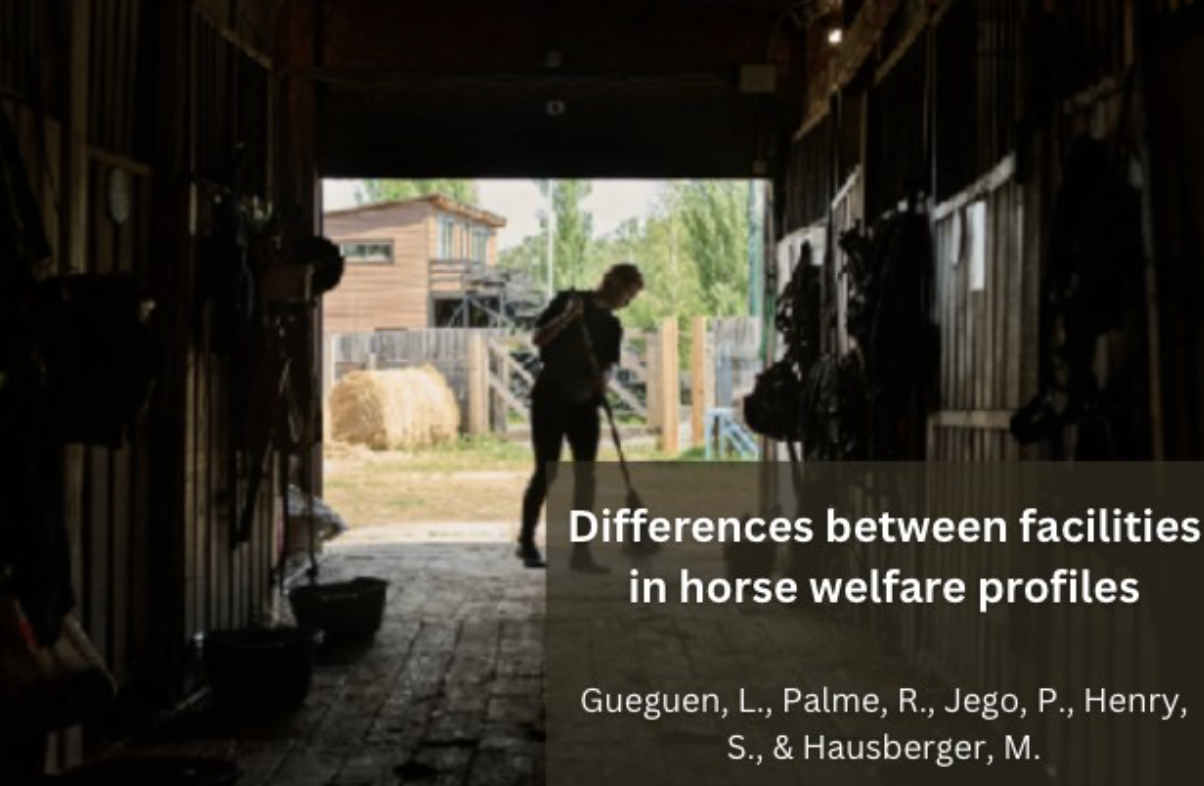
Differences between facilities in horse welfare profiles
Same management, different welfare?
• Different facilities show distinct horse welfare profiles
• Welfare differences include both behavioural and physiological measures
• Rider safety may be influenced by horse welfare
• Riding techniques may play a role in shaping welfare profiles
• Riding technique should be considered in welfare assessments
Many studies focus on animal welfare in terms of specific, either behavioural or physiological, indicators or on the impact of a particular management factor. However, an animal’s welfare state results from the individual’s perception of its general environment, which has consequences at both behavioural and physiological levels.
Previous research on horses has shown that different riding schools could be characterised by different emotional/cognitive profiles of horses, in relation sometimes with one single management factor.
In the present study, they aimed at determining if such facility-specific horse profiles could also be found in terms of welfare, i.e. facility-specific “welfare profiles”, using a multifaceted approach where animals’ welfare state was assessed based on detailed behavioural, health and physiological measurements.
A total of 59 horses from three different riding schools, with a very similar global conventional management but differed slightly in terms of turn-out frequency and riding techniques were studied.
Results showed that, despite the close similarity in management between the three sites, the horses’ welfare state was very different and specific to each structure.
This study that used behavioural, health and physiological measures, highlights the existence of facility horse welfare profiles and reveals that even apparently minor differences in management practices could have a major impact on the horses’ welfare state. The quality of ridden work, which is often not taken into account in studies on horse welfare, could be a major issue.
The limitations of this study include the interpretation of the role of human actions, as potential associations between caretaker behaviour and horse welfare were not directly tested, other unmeasured environmental factors (e.g. background noise) may have varied between facilities, and observations of caretaker behaviour were restricted to a single, filmed staff member per site, requiring cautious interpretation.
Note from ISES council: Although the study highlights potential effects of subtle management differences, key factors such as rider/handler behaviour were not directly measured. This means conclusions about what is “enough” to impact welfare should be interpreted with caution.
Read this paper here: https://www.sciencedirect.com/science/article/pii/S175173112500103X
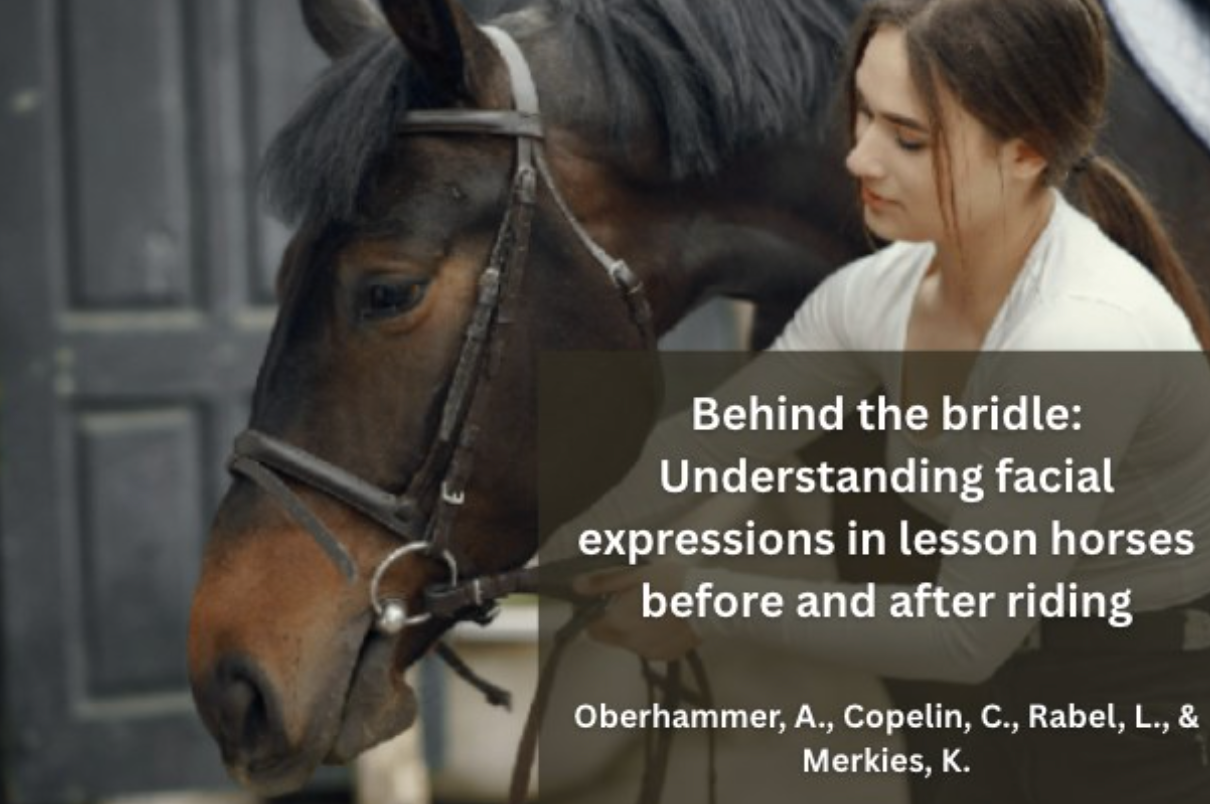
Behind the bridle: Understanding facial expressions in lesson horses before and after riding
What do horses’ faces reveal about beginner vs advanced riders? 🐴
Within riding lesson facilities, some individuals may assume that beginner riders place less strain on lesson horses than advanced riders due to reduced physical demands. However, this overlooks potential impacts on the horse’s affective state resulting from inconsistent or less refined handling.
This study investigated how rider level affects the emotional state of lesson horses during normal riding situations. Facial expressions were used to assess this, using a system called EquiFACS (Equine Facial Action Coding System), which tracks small changes in the horse’s face 👀
A total of 35 lesson horses were observed before and after they each took part in both a beginner and an advanced lesson.
Short video clips of the horse’s head were taken at different stages of the ride, including before preparation, after tacking up, after the ride, and after untacking 🎥
A trained and certified observer then analysed these facial expressions using this system.
Overall, rider level on its own did not strongly change the horses’ facial expressions. However, some differences were seen depending on the individual horse. For example, mares were more likely to show certain facial changes when working with beginner riders compared to advanced riders.
Horses with less experience in the lesson programme also showed more facial changes with beginner riders, suggesting they may be more sensitive to less consistent handling.
Changes were also seen across different stages of the ride. Facial expressions decreased after saddling and bridling, and then changed again after the ride, which may reflect anticipation before the lesson and relief or recovery afterwards. In general, mares showed more facial expression changes than geldings.
These findings suggest that the effect of rider level is not simple and may depend on the individual horse and their experience. The biggest changes in facial expression were linked to different stages of the lesson rather than rider level alone.
This highlights the importance of paying attention to subtle signs in the horse’s face, as these may help riders and coaches better understand how horses are feeling and how well they are coping within a lesson programme 🧠
A key limitation of this study is that rider level was simplified into broad categories, while important training, management and contextual factors were not controlled, meaning these variables may have influenced horses’ facial expressions and cannot be fully separated from rider effects.
Read this paper here: https://www.sciencedirect.com/science/article/pii/S0168159126000730?via%3Dihub
Riding with care: A review of factors that influence the welfare of the ridden horse and a case for the application of the precautionary principle in equestrian pursuits
Social License on the Line: Rethinking Ridden Horse Welfare
• Social license to operate highlights need to reassess industry practices. 
• Certain tack and riding styles risk injury, stress, fear, biomechanical dysfunction. 
• Riders may influence horses via their emotions, fitness, skill level and education.
• Unidentified lameness and health concerns threaten ridden horse welfare. 
• To promote welfare, precautionary principle should be applied when lacking evidence. 
Equestrian sport’s social license to operate has come under scrutiny due to concerns surrounding the well-being of ridden horses. Inappropriate equipment use, such as harsh bits or overtight nosebands, can negatively influence well-being by generating inescapable pressure or pain on the sensitive structures of the horse’s head and limiting natural behaviours. Restrictive equipment may also be used to generate exaggerated, stressful and uncomfortable head and neck positions such as hyperflexion. Saddles must be properly fitted to both horse and rider to ensure appropriate distribution of kinematic forces across the horse’s back and promote the horse’s comfort.
The rider’s balance, body control, ability to cue the horse, decision-making capabilities and understanding of equine behaviour can also influence the horse’s experience under saddle. Physical health conditions such as ulcers or unidentified lameness can cause pain, stress and mechanical damage if left untreated, which may be further exacerbated by riding. The ridden horse’s well-being is a multifactorial and complex equation.
However, riders must seek to understand these nuanced aspects of well-being, and act on the precautionary principle (stating that a practice should not be assumed harmless until it is proven to be so) if there is not yet enough evidence on a subject to draw firm conclusions. Such directives will safeguard the welfare of ridden horses and the social license to operate for equestrian sports.
You can read this paper here.
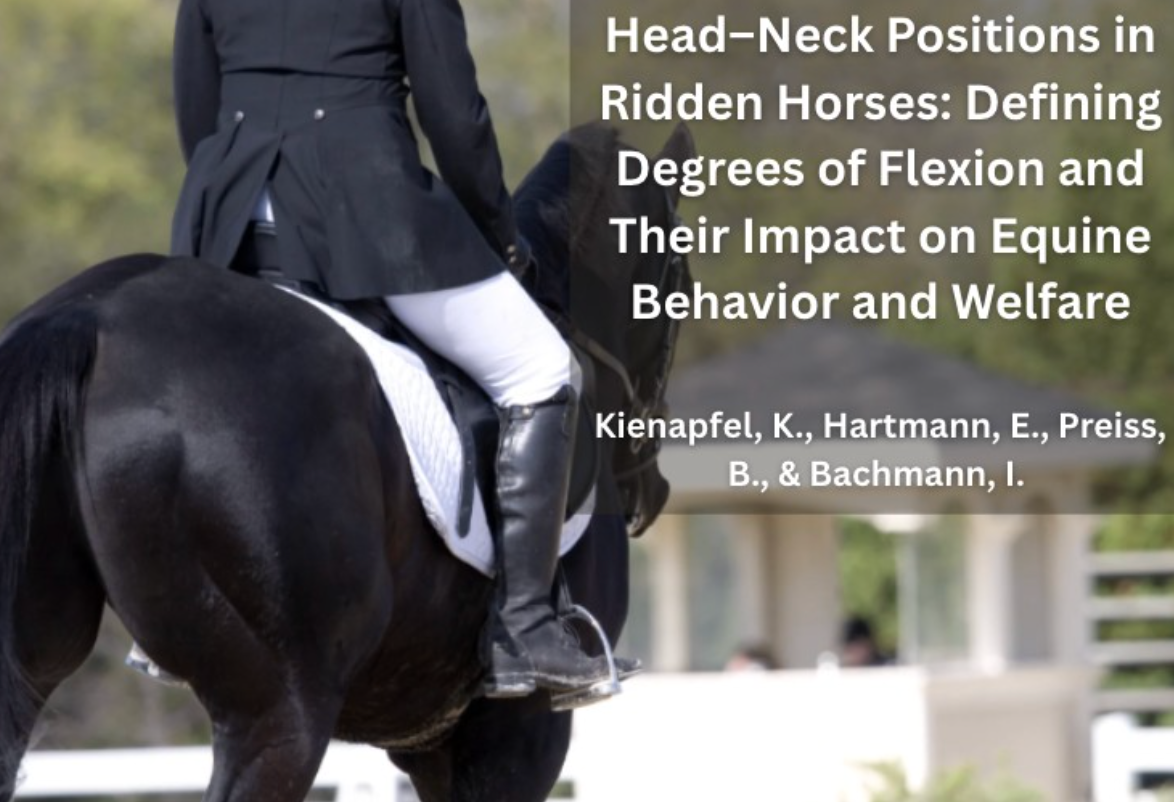
Head–Neck Positions in Ridden Horses: Defining Degrees of Flexion and Their Impact on Equine Behavior and Welfare
When Position Becomes Pressure: Behind-the-Vertical Effects on Behaviour
Horse sports are often under public scrutiny, especially when it comes to horse welfare. This study looked at how the position of a horse’s head and neck while being ridden affects their behaviour, particularly signs of discomfort or resistance. 🐴
Researchers observed elite dressage horses during competition warm-ups and tests, as well as horses shown in educational videos. In total, they analysed 191 rides via video footage frame by frame and recording how far the horse’s nose was in front of or behind the vertical, the angle at the poll, and behaviours such as unusual mouth movements and tail swishing. 🎥📊
They found that when a horse’s head and neck were held more “behind the vertical,” the horses showed more conflict behaviours, which can indicate discomfort or stress. A key point was identified at around 7.5 degrees behind the vertical, where these behaviours became more likely to increase. Stallions showed more of these behaviours than mares and geldings, while factors like age, breed, and bit type did not make a clear difference. 📉
Overall, the study suggests that paying close attention to head and neck position during riding can play an important role in supporting the horse’s comfort and welfare, especially in competitive dressage.
This study was limited by the range of head and neck positions observed, as most horses were ridden with their nose behind the vertical, which means the suggested cut-off value may not accurately represent the full range of riding positions. In addition, the warm-up phases were not standardised and video angles varied, which may have affected how consistently head and neck positions could be measured across all rides.
Read the study here.
Can All Behavioral Problems Be Blamed on Equine Gastric Ulcer Syndrome?
When “Bad Behaviour” Is Pain: Rethinking Behaviour in Sport Horses
This review examines “undesirable” and aversive behaviour in sport horses as a potential manifestation of underlying pain, with a particular focus on equine gastric ulcer syndrome (EGUS). 🐴🩺
The authors discuss how behavioural changes may reflect pain, fear, or learned anticipatory responses rather than “bad behaviour,” and highlight the challenges of interpreting behaviour given the influence of training, rider skill, breed, personality, and arousal. Current behavioural and pain assessment tools, including the Ridden Horse Pain Ethogram, are reviewed, with caution advised regarding their application outside the populations in which they have been validated. 📊
The evidence linking EGUS to aversive behaviour is mixed. While some studies and clinical reports associate conditions such as girthiness, changes in ridden behaviour, and eating patterns with gastric disease, other work finds weak or inconsistent relationships, particularly for glandular disease.
Recent findings using the Ridden Horse Pain Ethogram provide preliminary support for an association between gastric lesions and aversive ridden behaviour. The review emphasises that musculoskeletal disease, EGUS, and dental disease are the three most important differential diagnoses when evaluating pain-based behavioural complaints. 🦷📉
The authors advocate a multisystem, bias-aware diagnostic approach that integrates lameness evaluation, gastroscopy, and dental examination, rather than focusing on a single body system. They stress the importance of distinguishing between ongoing pain and learned behavioural responses, particularly in chronic conditions, and highlight the role of behavioural modification alongside medical treatment.
The review concludes by calling for improved definitions of clinical “healing,” greater use of objective outcome measures, and further research into tools, including wearable technologies, to better link behaviour, pain, and welfare in horses. 🔬📡
You can read the paper here.
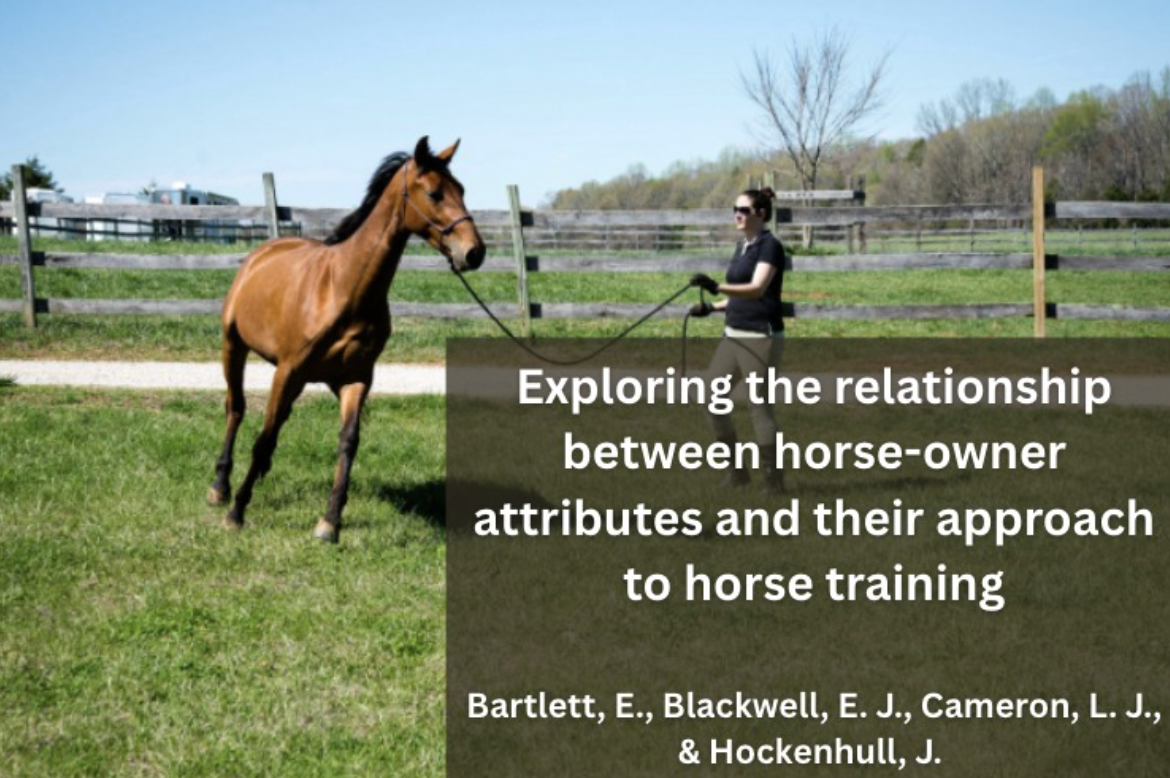
Exploring the relationship between horse-owner attributes and their approach to horse training
Why Do Owners Train the Way They Do?
The way horses are trained has implications for equine welfare and training success, yet little is known about the factors that influence horse-owners’ choice of training approach. Limited understanding in this area will hinder the development and dissemination of evidence-based training advice to owners. Consequently, this study aims to identify demographic and attitudinal factors that influence horse-owner training approach selection. 🐴
A 22-question online survey collected information from 1,593 horse-owners about their demographics, equestrian activities, goals and beliefs. Participants rated how likely they were to use six different horse training approaches on a five-point scale. 📊
Several factors were associated with reported training approach use, including age, gender identity, goals, activities, industry role and whether they had training in animal behavior. Beliefs about equine sentience, cognitive ability and whether science should inform horse training correlated with likelihood of applying aversives. 🧠
This study provides insight for further research and development of educational strategies to reduce the use of training approaches that may compromise equine welfare.
This questionnaire-based study is limited by self-selection and response bias, so the findings may not represent the wider horse-owning population. The results reflect reported intentions rather than actual training practices and lack information on how methods are applied or on horse-related factors that may influence training choices.
You can read this paper here.
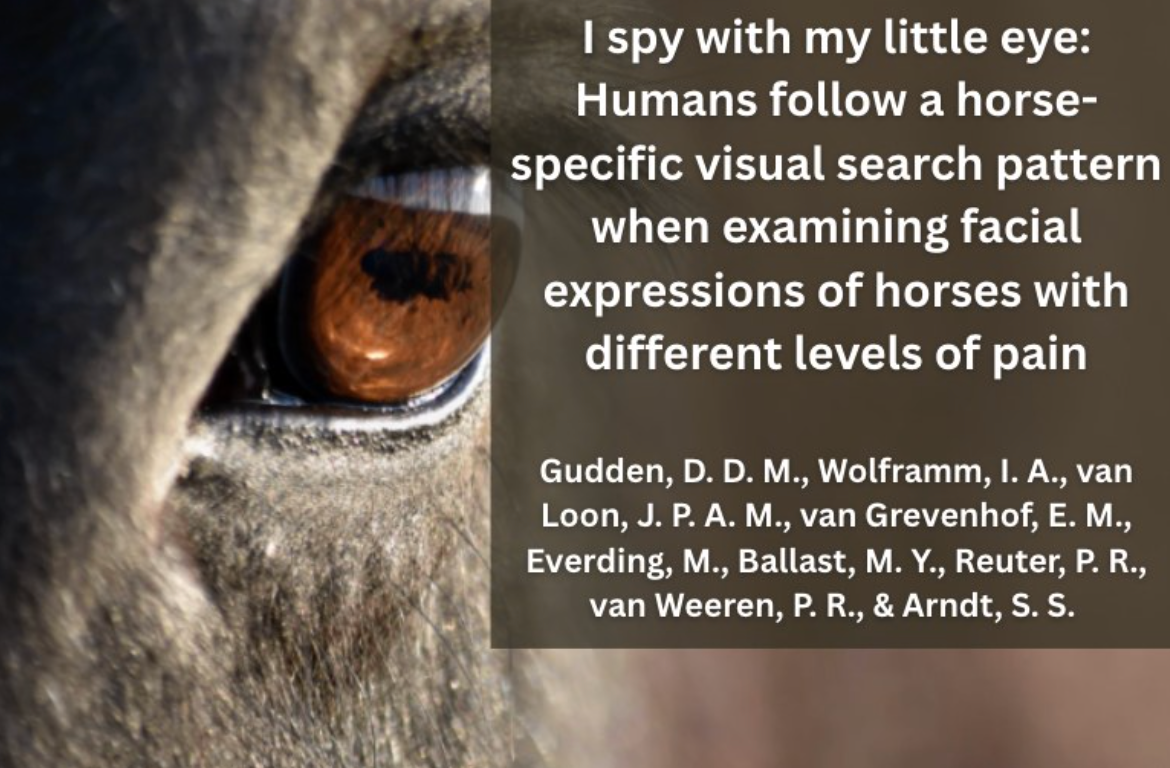
I spy with my little eye: Humans follow a horse-specific visual search pattern when examining facial expressions of horses with different levels of pain
Are We Looking in the Right Place?
• Humans follow a horse-specific visual search pattern: eyes, ears, then nose/mouth. 🐴
• Eyes play a significant role in assessing equine emotional states. 👀
• Moderate pain was assessed with similar accuracy across participant groups.
• Non-equestrians faced challenges with recognizing the absence of pain.
In daily interaction with horses, humans primarily rely on facial expression as a non-verbal equine cue for emotional information. Difficulties in correctly recognizing these signals might arise due to the species-specificity of facial cues, possibly leading to diminished equine welfare and health. This study aimed to explore human visual search patterns when assessing equine facial expressions indicative of various pain levels, utilizing eye-tracking technology.
108 individuals, classified into three groups (affinity with horses (N = 60), pet owners with no affinity with horses (N = 32), and individuals with no affinity with animals (N = 16)) participated in the study; with their eye movements recorded using eye tracking glasses they evaluated four photos of horses with different levels of pain. 📊
Participants’ accuracy was measured by comparing their ratings to a “gold standard” reference score. They also looked at how they viewed the images, including how many times and for how long they looked at specific areas (eyes, ears, nostrils, and mouth) across the four photos.
Highlighting the critical role of the eyes as key indicators of pain, findings showed that the eyes played a significant role in assessing equine emotional states, as all groups focused on them for a longer time and more frequently compared to other facial features. Also, participants showed a consistent pattern in how they looked at a horse's face, first focusing on the eyes, then the ears, and finally the nose/mouth region, indicating a horse-specific pattern.
Moderate pain was assessed with similar accuracy across all groups, indicating that these signals are broadly recognizable. Nevertheless, non-equestrians faced challenges with recognizing the absence of pain, possibly highlighting the role of experience in interpreting subtle equine expressions.
Future work could further investigate why humans follow this visual search pattern and whether they recognize the significance of a horse's ears. Additionally, emphasis should be placed on developing targeted training interventions to improve equine pain recognition, possibly benefiting equine welfare and health. 🔬
Differences in lighting, background noise, and viewing conditions could have influenced focus, and some participants compared posters with each other, which may have biased their scores. The study also used only one photo to represent each pain level, meaning results may partly reflect the unique features of those specific images rather than pain level alone. Future studies should include multiple photos per pain category to improve reliability and generalisability.
You can read this paper here.
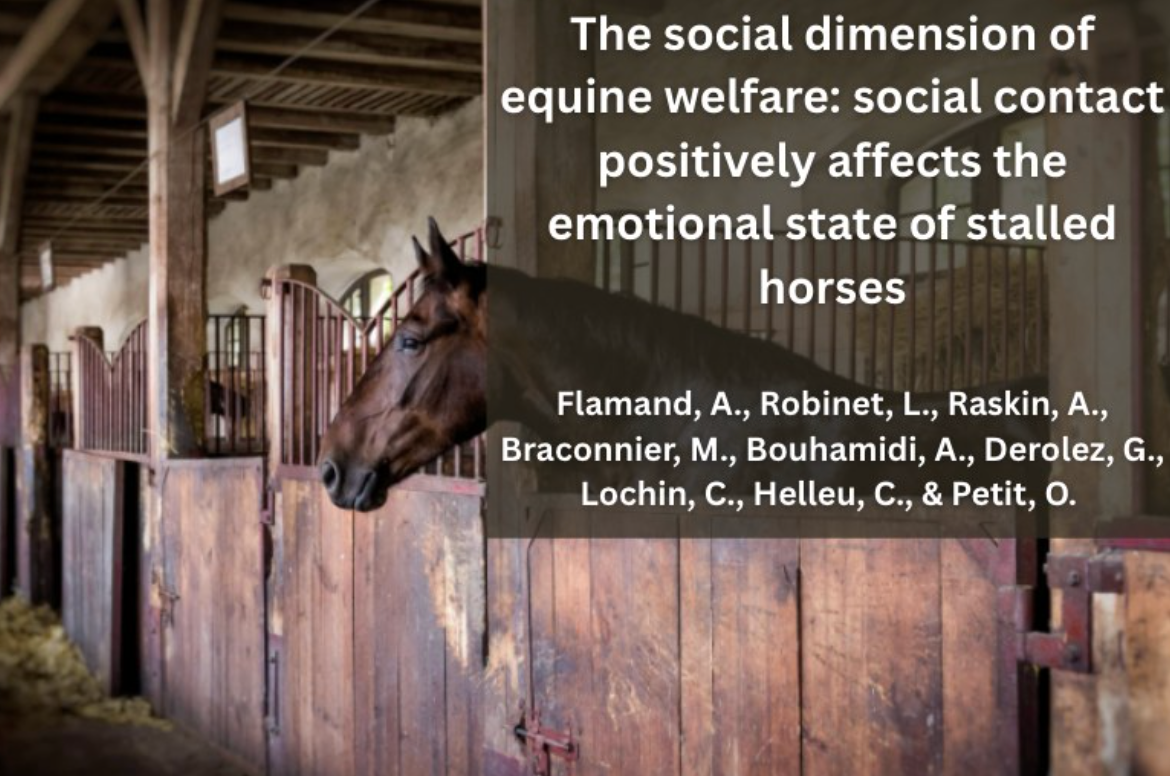
The social dimension of equine welfare: social contact positively affects the emotional state of stalled horses
Stabled but Not Social: The Welfare Cost of Isolation
• Social contacts reduce stereotypies in horses housed individually. 🐴
• Horses with social contacts show fewer negative behaviours with humans.
• Horses with social contacts are less vigilant when groomed by humans.
• Emotional state can be positively influenced by social contacts. 💚
• Social contacts, even temporary, improve the welfare of horses.
The housing conditions of domestic animals influence their welfare; their emotional state can be negatively affected if their needs are not met. This can lead to behavioural changes or disorders that can damage the animal–human relationship. In social species such as horses, Equus caballus, social contact is a fundamental need that is severely restricted by individual housing. Thus, this study aimed to evaluate the impact of socialization on the emotional state of horses in different contexts.
They studied 20 adult horses housed in individual stalls. The horses were divided equally into two experimental conditions: horses without social interaction (isolated condition) and horses with the opportunity to interact temporarily with a conspecific (social condition). For 4 months, the horses under the social condition interacted in pairs for 1 h daily in a meeting box.
Throughout this period, the behaviour of the entire sample of horses in individual stalls and during grooming sessions with humans was recorded. In addition, a judgement bias test was conducted at the end of the study period. In the individual stall, we collected indicators of poor welfare such as hypervigilance, apathy, aggressiveness towards humans and stereotypies. During grooming, we observed negative and positive behaviours, alertness levels and general attitude.
Horses in the social condition exhibited fewer stereotyped behaviours in the individual stall than the isolated ones. During grooming, they expressed fewer negative behaviours, spent less time in a vigilant state and showed a less tense attitude. In the judgement bias test, horses in the social condition showed an optimistic bias compared with the isolated horses.
These findings indicate that horses that are allowed to interact socially perceive their environment more positively than their isolated counterparts. Temporary but regular social contacts positively affect the emotional state of horses in various contexts, indicating an overall improved welfare. 📊
This study is limited by its small sample size and the fact that horses were assigned to conditions based on owner preference rather than randomisation. Additionally, the work was conducted in a specific management and seasonal context (sport horses housed in individual stalls during winter), so results may not directly translate to other housing systems or times of year.
You can read this paper here.
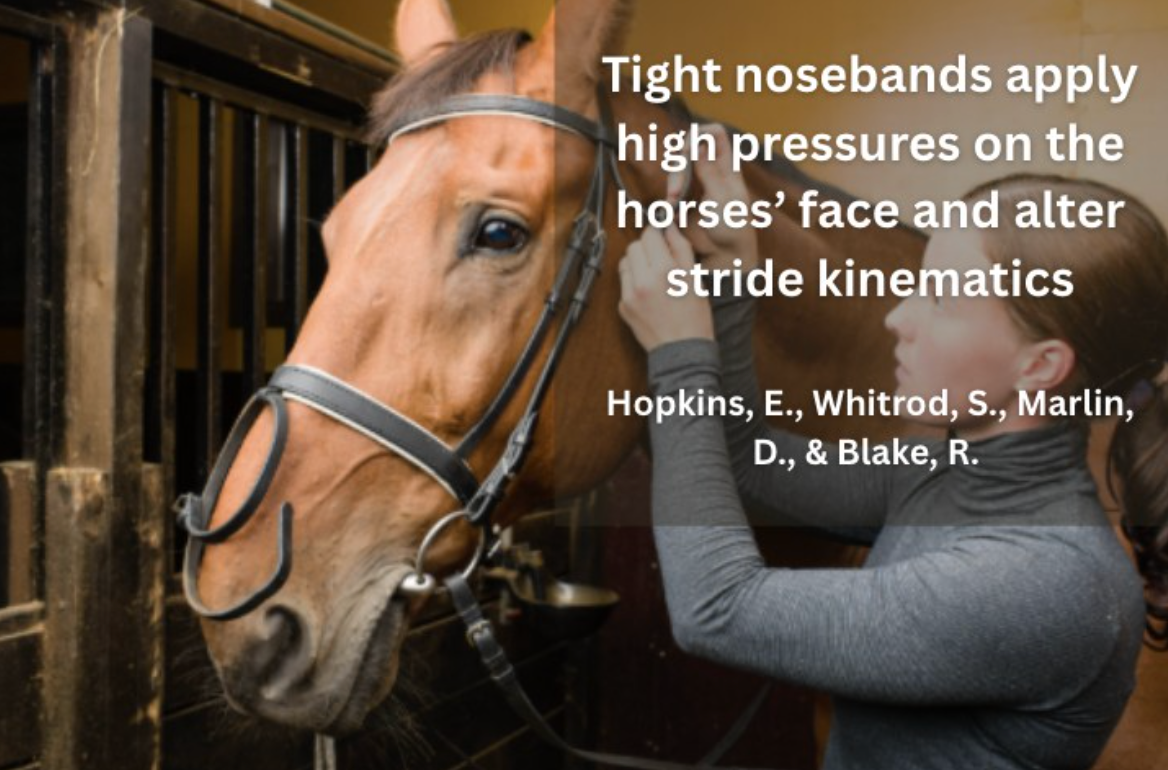
Tight nosebands apply high pressures on the horses’ face and alter stride kinematics
Strap Tighter, Move Shorter: Noseband Pressure and Stride Reduction
Noseband tightness has received increasing attention within equitation science, but there is still limited research examining how it affects horse behaviour or performance. This study aimed to measure peak pressure under the noseband in live horses at three different levels of tightness and to assess how noseband tightness influences limb and back movement. 🐴📊
Eight horses were tested, with noseband tightness set using the International Society for Equitation Science (ISES) taper gauge at three standardised settings: two fingers, one finger, and zero fingers. Peak pressure under the noseband was measured using pressure sensors, and motion capture technology was used to analyse limb and back kinematics. 🎥📏
Peak pressure increased as the noseband was tightened, with pressures at the one-finger and zero-finger settings showing increases of 54% and 338%, respectively, compared to the two-finger setting. As noseband tightness increased, stride length decreased, showing a significant negative relationship. On average, stride length decreased by 6.2% at the one-finger setting and by 11.1% at the zero-finger setting when compared to the two-finger setting. 📉
In conclusion, tightening the noseband increased peak pressure and had a negative effect on horses’ movement, particularly stride length.
The study had several limitations, including analysing movement only from the side, which captured forward–backward limb motion but not side-to-side or rotational movement, as well as unavoidable measurement error from skin movement and differences between horses in training level.
You can read this paper here.
Development of the Human–Equine Attachment Scale
How Strong Is the Human–Horse Bond? And Can We Measure It?
Research on human-animal interactions has established that numerous benefits can result from human relationships with diverse companion animal species in the domains of physical, social and psychological outcomes. 🧠🐾
Therefore, numerous animal-attachment scales have been developed to measure the extent of individual human’s attachment to their companion animals. Validated attachment scales exist for humans with dogs and cats. However, to date there has been limited research into the attachment that forms between an owner or keeper and their horse, and few attempts to create an instrument that is capable of capturing its different domains. 🐴
This study describes the development of the Human-Equine Attachment Scale (HEAS) and investigates its reliability and validity in the context of owner attachment to horses used for casual and competitive riding. The scale was tested with over 3,600 horse owners in the UK.
They completed a 25-question survey where they rated how strongly they agreed with different statements about their relationship with their horse. The questions were based on well-known measures of how people bond with animals, adapted specifically for horse ownership, with a few extra questions added to reflect the unique aspects of owning and caring for a horse. 📊
The researchers tested how well the questionnaire worked and removed a few questions that overlapped too much with others. The final version measured six main parts of the human–horse bond and showed good overall reliability, meaning the scale gives consistent and trustworthy results. ✔️
The subscales indicated 1) companionship, 2) personal wellbeing, 3) dependence, 4) status, 5) growth and 6) sacrifice were key factors within the scale. The study establishes HEAS as a coherent and psychometrically robust measure of human-equine attachment, with potential for utilisation in social science and health related research, and to support research to improve successful pairings between horses and humans. 🤝
The sample may be biased because participants were recruited through a science-focused equine website, which may not reflect the wider horse-owning population. The questionnaire was also only completed once, so future studies should check whether people give similar answers over time.
You can read the paper here.
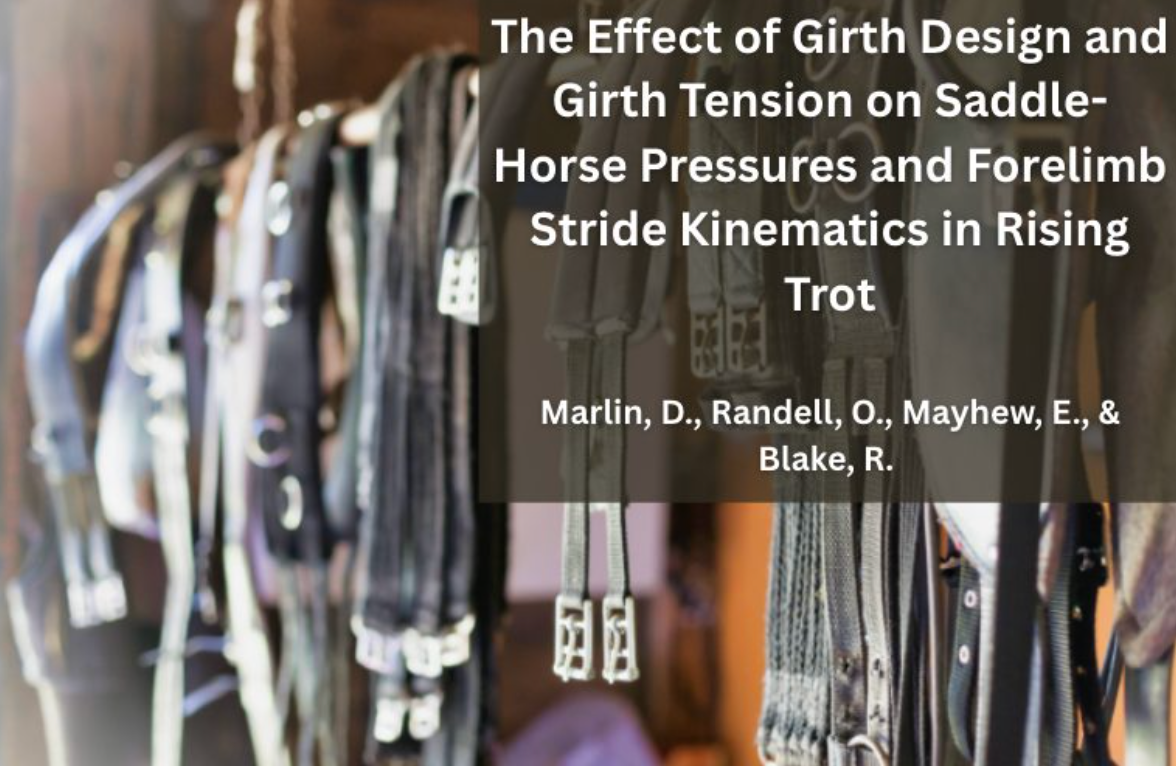
The Effect of Girth Design and Girth Tension on Saddle-Horse Pressures and Forelimb Stride Kinematics in Rising Trot
Tightening the Girth: What Happens Beneath the Saddle?
Horse tack, including the girth (the strap that holds the saddle in place), can influence how comfortable and free-moving a horse feels when being ridden. 🐴
This study investigated how different girth designs and levels of girth tightness (tension) affect pressure beneath the saddle and forelimb movement during a rising trot. Six regularly ridden horses were tested using two girth types: a straight design and an anatomical (shaped) design, at two levels of tightness. 🐎
Changes in girth type or tightness had minimal effects on forelimb movement. However, increased girth tightness resulted in a noticeable shift in saddle pressure towards the cranial (front) region of the back. This shift in pressure may be relevant, as it could contribute to discomfort or back-related issues over time. 📊
Overall, the findings indicate that although girth design and tension do not appear to immediately alter movement, higher girth tension can influence saddle pressure distribution, with potential implications for long-term comfort and performance. The main limitation of this study is the small number of horses.
You can read this paper here.
“But my horse is well cared for”: A qualitative exploration of cognitive dissonance and enculturation in equestrian attitudes toward performance horses and their welfare
When Care Conflicts With Performance
There is concern amongst the public, equestrians, animal welfare organisations, and horse-sport governing bodies regarding the welfare of performance horses 🐎⚠️, but equestrian culture appears slow to change.
The present study seeks to increase our understanding of human factors underlying the persistence of welfare-compromising management and training practices within the performance horse world 🧠📚. Individual, semi-structured interviews focused on equestrians’ attitudes were conducted with 22 equestrians from classical equestrian disciplines in the US, Canada, and the UK 🌍.
Five main themes were identified: perception of welfare issues; conflicting conceptions of a good life; objectification of the horse; instrumentalisation of horse care; and enculturation 🔍.
Participants perceived and were concerned about horse welfare, but expressed dissonance-reducing strategies, including trivialisation, reframing and justification 🤔. Participants shared conflicting conceptions of a good life and described how equestrian activities may infringe upon horse welfare.
Objectification of horses was among the attitudinal factors identified that may permit persistence of harmful practices, while the instrumentalisation of care theme showed how management practices often focused on performance and the horse’s job more than care about the horse 🏆➡️🐴.
Finally, enculturation (the process of adopting attitudes and behaviours of a culture) in equestrianism may be fundamental to maintaining practices and attitudes that compromise horse welfare 🧩.
These findings provide an enhanced understanding of why horse welfare issues persist in classical equestrian disciplines and may inform future human behaviour change strategies to promote improved horse welfare ✅📈.
This was an exploratory qualitative study meant to provide a foundation for future studies and not intended to be generalised across broader equestrian populations ⚖️.
You can access this paper here.
Opinions of trainers of Warmblood, Thoroughbred and Trotter horses in Germany on the pretraining management of yearlings and two-year-old horses – a qualitative analysis
How Early Is Too Early? Training Young Horses and Welfare Concerns
The early career start of racehorses, the pretraining of two-year-old Warmblood stallions for licensing, and individual housing of young horses raise animal welfare concerns 🐎⚠️.
This study assessed pretraining practices and trainers’ opinions on housing of young horses, minimum age to commence training and pretraining injuries 🧠📋.
Qualitative interviews with trainers of Warmblood stallions and Thoroughbred and Trotter racehorses (n = 10 each) were conducted 🗣️.
Pretraining of Thoroughbreds and Trotters began at 18 months, whereas licensing preparation of Warmblood stallions began at 29–30 months. For horses not achieving the expected results, procedures for Warmblood stallions differed from racehorses. Warmblood stallions not meeting expectations were often castrated and trained as riding horses, whereas Thoroughbreds and Trotters remained in training, but intensity was reduced.
Warmblood trainers did not report injuries requiring pretraining interruption. Thoroughbred and Trotter trainers suggested tendon damage as an occasional problem 🦵.
Group housing was not utilized because of the risk of injury due to agonistic behavior, especially among stallions, difficulty of individual feeding and disruption when horses were removed and returned. Straw bedding was used in 28 out of 30 yards and horses were fed 8–10 kg of hay/day 🌾. Except for three yards, horses were provided contact with neighbors through bars in stall walls.
Trainers largely fulfilled legal welfare requirements but horses had limited free movement and social interaction. None of the trainers agreed with the suggestion of a minimum age of 30 months for training ⚖️.
The study used semi-structured interviews, which are useful for exploring views but are limited by small sample sizes and researcher influence. Responses became predictable, suggesting sufficient interviews, but awareness of welfare debates may have shaped answers. Yard visits helped verify consistency between reported practices and observations 👀✅.
You can access this paper here.

Time-activity budget in horses and ponies: A systematic review and meta-analysis on feeding dynamics and management implications
How Horses Spend Their Time — and Why It Matters
The time-activity budget is a key indicator of animal welfare ⏱️🐎. This meta-analysis integrated 14 studies (1979–2020) with 364 horses under wild, natural-living, and stabled conditions to evaluate feeding, resting, standing, and locomotion
The study aimed to categorize daily behavioural patterns in equines, with emphasis on feeding behaviour 🌱.
Feeding was greater
- in free-ranging (56 %) than stabled horses (38 %),
- in grouped (54 %) vs. isolated (39 %),
- in females (64 %) vs. males (48 %),
- and in grazing (56 %) vs. hay-fed horses (39 %).
Resting was higher
- in young, small, grouped, and grazing horses
Standing was more common
- in stabled, isolated, adult, larger, and hay-fed animals
Locomotion increased
- in free-ranging, grouped, and grazing horses
Management promoting foraging, social interaction, and locomotion enhances equine welfare
The study is limited by its small dataset, differences in behavioural measurement methods, and missing environmental details, which may introduce variability and restrict interpretation ⚖️. Its heavy focus on Northern Hemisphere research also limits how well the findings apply to global horse populations and management systems 🌍.
You can access this paper here.
Importance of the social environment for reproductive and general welfare of domestic horse (Equus caballus) stallions
Why Social Contact Matters for Breeding Stallions
The obligation to ensure the welfare of domestic horses is evident 🐎⚖️. Social bonds are an essential part of the daily life of feral horses.
In human-controlled conditions, stallions usually live alone in a barren environment of individual boxes or paddocks, with contact to conspecifics limited to visuals. Still, many stallions do not have regular access to paddocks and pastures 🚧.
This provokes frustration and stress, which has been shown to contribute to the development of stereotypies, self-mutilations, abnormal sexual behaviour and reproductive problems ⚠️.
This review highlights how domestic environments may negatively diverge from the natural conditions necessary for the healthy behavioural development of stallions. We address stallions' welfare and reproductive problems that may arise from their lack of social contact.
These issues are discussed along the stages of a stallion's life under free-ranging conditions 🌿.
We postulate that today's breeding stallions must be enabled to enjoy the positive aspects of a bachelor stallion's life. This should include adequate consideration of the stallions' reproductive behaviour, including contact with a sexually receptive mare 🤍.
This will not only improve animal welfare but also ensure optimal semen quality and fertility ✅.
You can access this paper here.
Social Isolation of Horses vs. Support Provided by a Human
Can Humans Replace the Herd?
It is assumed that horses have a strong herd instinct that cannot be suppressed by any form of social support from humans 🐎👥.
The aim of this study was to assess the behaviour and heart rate parameters of horses that received various forms of human support during short-term social isolation 💓.
The research material consisted of 12 clinically healthy recreational Warmblood mares and geldings. The test was carried out four times 🔁.
The research test consisted of two parts, which began in the presence of accompanying horses and under conditions of social isolation, with and without support provided by a human (types of contact: tactile, vocal, tactile and vocal).
Behavioural observations were carried out on a five-point scale, and the heart rate parameters were measured 📊.
It was concluded that social support provided by humans in tactile, vocal, or tactile and vocal forms during the isolation of horses from the herd does not have very significant effects, especially in mares. The geldings respond much more favourably than the mares.
In addition, at this point in the research, it can be suggested that vocal support may have the best effects 🗣️. The more emotionally balanced the horses are, the more pronounced these effects should be ✅.
The study did not include stallions, young horses, different environments, or human influences on upbringing and training, so it is unknown how these unexamined factors might have affected the results ⚖️.
You can access this paper here.

Grief-like distress responses in horses after the death of a conspecific
Do Horses Grieve the Loss of a Companion?
As a social species, it would be anticipated that horses may display altered behaviours toward dying or dead conspecifics 🐎💔. However, there is remarkably little literature on this subject.
The aim of this study was to identify behavioural changes in horses who have experienced the loss of a companion equid. An online survey was used to collect data on the housing and management of the equids, information on the surviving and deceased equid (including relationship), the passing of the deceased equid, and the type and duration of immediate and sustained behavioural changes in the surviving horse.
The survey was completed for 325 surviving horses. Horse owners reported multiple changes in behaviour in the surviving horse within 24 h of the companion’s death; most often related to arousal, behaviour directed towards other equids and people, alertness to stimuli and vocalisation.
Multiple logistic regression models indicate that horses who had shared an affectionate relationship, rather than simply tolerated each other, were more likely to change their excitement to interact with others or at feeding time and behaviour towards humans. These behavioural changes often persisted for 6 months after the death of their companion ⏳.
Horses who had witnessed the death of their companion were more likely to show alterations in time spent sleeping and feeding within 24 h of death, compared to before companion death. These surviving horses were also more likely to have a change in excitement towards interacting with others and/or around feeding time and vigilance 👀.
Whether or not the surviving horse had spent time with the dead body did not affect its behaviour in the first 24 h of loss. However, within 6 months after the death of the companion, horses who could spend time with the body had no change in vocalisation and excitement to interact with others and/or to feed time. Conversely, horses who could not spend time with the body were more likely to show a change in arousal and vigilance.
These findings indicate that horses may express grief-related behaviours, but further independent empirical evidence is required 📚. The death of a companion can have negative consequences for the survivor’s welfare, and this study may help owners manage emotional welfare better during this difficult time ❤️.
This study relied on owner-reported behaviours rather than direct observations, which introduces possible recall bias and the influence of owners’ emotional responses on the surviving horses' behaviour, despite efforts to minimise these effects through careful participant selection, “not sure” response options, and item-specific questioning ⚖️.
You can access this paper here.
Sensory Assessment of Hay Samples: Abnormal Odor Predicts Increased Dust Levels and Impurities Suggest Microbiological Contamination
Can Sight, Touch, and Smell Really Detect Poor-Quality Hay?
Hay is a major part of a horse’s diet, but if it contains too much dust or is contaminated with harmful microorganisms like mould or bacteria, it can cause serious breathing problems 🐎🌾.
Horse owners and caretakers often check hay quality using sight, touch and smell, but it is unclear whether this simple method can detect hay that might be harmful.
In this study, researchers collected 50 hay samples from horse owners and examined them using both sensory examinations, as well as specific methods to measure dust levels and check for potentially harmful microorganisms.
The results showed that hay with an abnormal smell was more likely to produce high levels of dust, and hay with visible dirt or debris was more likely to contain potentially harmful bacteria or fungi.
This research highlights the value of basic sensory assessments as a rapid and low-cost means to monitor hay hygiene and protect horses’ respiratory health 💨.
Results should be interpreted cautiously given the modest sample size, subjectivity of sensory scoring, absence of clinical data, and limited explanatory power of the models ⚖️.
You can access this paper here.
The effect of choice on horse behaviour, heart rate and heart rate variability during human-horse touch interactions
Forced or Free? How Choice Shapes Horses’ Responses to Touch
This study explored how therapy horses respond to different kinds of touch—patting, stroking, and scratching—on different body areas when the interaction is either forced or chosen by the horse 🐎🤝.
Ten therapy horses were touched by experienced and less experienced participants in two conditions: (1) forced touch, where the horse was tethered and the person had to touch all areas in a fixed sequence, and (2) free-choice touch, where the horse was loose and the person only touched the horse if it approached.
Horses showed more signs of discomfort—such as oral behaviours, restlessness, and tail swishing—during forced touch, although they shook their heads less in this condition. Tail swishing also varied by body area, being least frequent when the hindquarters were touched.
In the free-choice condition, horses were much more likely to hold their heads low and less likely to keep their ears focused on the person, suggesting a calmer, more self-directed posture.
Heart rate was higher during free-choice touch, but heart rate variability showed that horses were more physiologically relaxed with less experienced handlers. Overall, the findings indicate that forced touch was not perceived positively, emphasising the importance of giving therapy horses choice and control during equine-assisted services ✅.
This study examined how horses responded differently when touch was forced versus when they could choose to engage, but it did not separate the effects of touch itself from the influence of choice. Because all testing occurred outdoors on short grass, the horses’ natural grazing behaviour may also have affected how often they stayed within reach, highlighting the need for future research to isolate the effects of touch and choice more clearly ⚖️.
You can access this paper here.
Influence of lighting on sleep behaviour, circadian rhythm and spontaneous blink rate in stabled riding school horses (Equus caballus)
Do Stable Lights Affect How Horses Sleep?
Modern horse management often involves long periods indoors under artificial light, which may affect sleep and circadian rhythms 🐎💡.
This study compared the effects of a customised LED lighting system (blue-enriched light by day, dim red light at night) with standard fluorescent lighting on sleep, blink rate, and circadian gene activity in ten riding school horses.
Behaviour, blink rate, and hair samples were recorded over four weeks in a cross-over design 🔄.
Lighting type had no effect on total sleep, recumbency, wakefulness, or clock gene expression, though horses under LED light showed slightly more daytime wakefulness.
Dim red night lighting did not disrupt normal sleep or rhythms, suggesting tailored LED systems may support healthy day–night cycles in stabled horses 🌙.
However, results should be interpreted cautiously due to the small sample size, individual variation in sleep behaviour, and possible exposure to natural light during the control phase ⚖️.
You can read this paper here.
A move in the right direction: Tracking the traceability of British Thoroughbreds outside of racing
Life After Racing: What the Data Tell Us About Former Racehorses
Owner/keeper submissions for 8,256 horses were analysed 🐎📊 and extrapolated to a national estimate of ~33,600 former racehorses, of which ~80% are currently traceable.
While 98% of horses held passports 📘, only 64% were registered in the current owner’s name despite 90% awareness of the requirement.
Most horses were owned (91%), predominantly geldings (74%), aged 5–14 years, and used mainly for leisure, hacking, or unaffiliated competition 🏇.
Respondents expressed strong support for digital identification/e-passports 💻, but knowledge gaps and variable compliance were evident—particularly around change-of-ownership and notification of death.
These data provide a baseline to strengthen lifetime traceability, guide education and policy 📚, and evaluate aftercare outcomes over time.
However, as a single time-point, self-reported dataset with uneven response to sensitive items, results should be interpreted cautiously ⚖️ and validated with repeat censuses and complementary qualitative work.
You can read this paper here.
The face of the Canadian riding lesson industry—common management practices and industry opinions
Are Riding Lesson Horses Really Worse Off?
Riding lesson horses have generally poorer welfare than other types of horses. 🐴 A survey was distributed to operators of Canadian riding lesson facilities to identify management trends that may influence the welfare of lesson horses, as well as to understand the demographics of the Canadian lesson herd and the people responsible for their care.
📋 The survey received 154 responses representing 13.2% (n = 1550) of the total estimated Canadian lesson herd. Tests determined relationships among quantitative responses and thematic content analysis analyzed qualitative responses. Responses suggested that Canadian lesson horses largely receive species-appropriate care with daily access to group turnout and regular attention from veterinarians and farriers.
🌱👩⚕️🦶 A high level of concern for the health and comfort of lesson horses was demonstrated through use of complementary and alternative veterinary medicine, dietary supplements, joint injections, and/or ulcer and pain-management medications.
💊🩺 Qualitative responses highlighted financial challenges and client expectations as significant obstacles to ensuring the welfare of lesson horses.
💰⚠️ This increased understanding of the landscape of the Canadian riding lesson industry provides new avenues for further research, suggesting that the reportedly poor welfare of lesson horses may not be related to management but other factors unique to the life of lesson horses.
🔍 This study is limited by typical survey biases—including self-selection, nonresponse, misinterpretation of questions, regional sampling imbalance, and low engagement from several provinces and territories—which may affect how representative the results are of the wider Canadian lesson industry. 📝⚠️
This is an open-access paper - you can read it here.
Automated recognition of emotional states of horses from facial expressions
🔥 For the first time ever, AI has successfully decoded horse emotions from their faces.
Animal affective computing is an emerging new field, which has so far mainly focused on pain, while other emotional states remain uncharted territories, especially in horses. 🐴💭
This study is the first to develop AI models to automatically recognise horse emotional states from facial expressions using data collected in a controlled experiment.
🤖📹 They explore two types of pipelines: a deep learning one which takes as input video footage, and a machine learning one which takes as input EquiFACS annotations. The former outperforms the latter, with 76% accuracy in separating between four emotional states: baseline, positive anticipation, disappointment and frustration.
📊 Anticipation and frustration were difficult to separate, with only 61% accuracy. 😬
However, results should be interpreted cautiously given the study’s context-specific design, unmodelled individual factors (e.g., breed, age, sex), and limited generalisability beyond the experimental setup. There are also a limited number of EquiFACS Facial Action Units (FAU) that are needed to associate with a specific affective state, so the training of the AI system may have gaps or flaws. ⚠️🔍
This is an open-access paper - you can view it here.
Rein tensions and behaviour with five rein types in international-level vaulting horses
Did you know rein type could almost double rein tension?
Rein tension can affect the comfort and performance of vaulting horses.
This study measured rein and lunge line tensions in 39 international-level horses cantering with different rein types permitted by FEI rules, including side reins with or without elastic, fully elastic reins, draw reins, and reins fixed to the noseband (see the paper for equipment classification). Rein type significantly influenced total tension, which ranged from 6.2–11.7 kg, with right-side tension consistently higher.
 Greater tension was associated with increased mouth opening, a behavioural sign of discomfort.
 Draw reins produced the lowest total tension and least mouth opening, though individual differences remained high.
These results highlight that rein type affects both tension and comfort, reinforcing the importance of appropriate rein selection for horse welfare.
 However, as some horses were unfamiliar with certain rein types and surface conditions varied slightly, further research is needed to confirm these findings under standardised conditions.
This is an open access paper - you can view it here.
Competition and stereotypic behavior in Thoroughbred horses: The value of saliva as a diagnostic marker of stress
Stereotypic behaviours, such as crib-biting and weaving, can be seen in horses kept under restrictive management, but their physiological basis remains unclear. 🐴
This study investigated whether stress-related salivary biomarkers differ between Thoroughbreds with and without stereotypies.
🧪 Saliva was collected at rest from three groups: ten high-level competition horses without stereotypies, eleven high-level competition horses showing stereotypies, and five non-competing leisure horses with stereotypies. Cortisol concentrations were highest in competing non-stereotypic horses, suggesting that intense training may elevate stress hormone levels.
📈 In contrast, alpha-amylase (sAA) activity was significantly higher in non-competing stereotypic horses, indicating heightened sympathetic nervous system activation.
⚡ Butyrylcholinesterase (BChE) activity did not differ between groups. These findings suggest that both competition level and stereotypic behaviour influence physiological stress responses, supporting saliva biomarkers as valuable non-invasive welfare indicators in horses.
🧬 The small sample size and lack of repeated measures mean this finding should be interpreted cautiously. ⚠️
This is an open-access paper, you can view it here.
Owner-Observed Behavioral Characteristics in Off-the-Track Thoroughbreds (OTTTBs) in Equestrian Second Careers
🐎 Equestrians offer a pivotal avenue of rehoming for Thoroughbred horses that retire from the racing industry.
However, behavioural attributes considered advantageous in racehorses may be inappropriate in equestrian mounts. Understanding the behaviour of off-the-track Thoroughbreds (OTTTBs) is critical to the welfare and safety of horses and handlers. 🧠💛
This study explored behavioural characteristics in OTTTBs compared with other ridden horses, using owner-observed information from the Equine Behaviour Assessment and Research Questionnaire (E-BARQ) database. Behaviours associated with boldness, compliance, rideability, trainability, and responsiveness to acceleration and deceleration signals were analysed. 📊
OTTTBs demonstrated more boldness, with lower compliance and responsiveness to deceleration signals, than other horse breeds in this study. ⚡🐴 These findings illustrate both the equestrian potential of OTTTBs and the behavioural challenges they can present. The study highlights the importance of further research into the relative influences of breed and life experiences on behaviour in OTTTBs, to enable training and management practices to be evidence-based for enhanced equine welfare. 🔍📚
Results should be interpreted cautiously given the potential for self-reporting and sampling biases, as well as the inability to infer causality between temperament, experience, and behaviour within the scope of this study. ⚠️
You can find this article here.
Impact of feeding strategies on the welfare and behaviour of horses in groups: An experimental study
🐴 Feeding strategies must meet horses’ needs without compromising welfare, especially in group housing where limited hay can cause aggression and injury.
🌾 This study compared three feeding regimes in 18 mares: traditional (three 2-hour daytime meals), portioned (six 1-hour meals across 24 h), and ad libitum slow-feeding with hay nets.
🧠 Horses using slow-feeders showed activity time budgets resembling natural conditions, while portioned feeding appeared more frustrating, showing no reduction in agonistic behaviours and reduced lying time by approximately 11 min/day compared with other systems.
💚 Traditional and slow-feeding regimes supported calmer interactions.
⚖️ Portioning into smaller, frequent meals did not reduce stress, while slow-feeding emerged as a more suitable, welfare-friendly strategy that warrants further investigation.
📊 As the study was short-term and limited to mares in small groups, further research is needed to confirm these findings under varied conditions.
You can find this article here.
Social facilitation of trotting: Can horses perceive and adapt to the movement of another horse?
🐴 Horses can regulate their own exercise intensity, influenced by social and motivational factors.
🎥 This study tested whether seeing another horse trotting would increase effort.
🐎 Seven horses completed a 2×2 crossover trial after treadmill familiarisation, viewing either a trotting horse video or a racetrack image without horses.
❤️ When shown the trotting horse, heart rate, plasma lactate, and alert behaviours (ears forward, raised head angle) increased significantly compared to control conditions.
🧠 The visual stimulus was well tolerated and activated anaerobic lactic pathways, suggesting horses perceived and adapted to a social environment.
👀 These results indicate that social visual cues can safely encourage forward movement, offering a welfare-friendly alternative to whip use.
⚖️ However, because treadmill speed could not be freely regulated and researchers were not blinded to conditions, further studies are needed to confirm these findings and assess how horses self-regulate movement in social contexts.
You can find this article here.
