
ISES 2026 Conference Research Summaries
Missed a presentation or want to revisit the key findings? Explore short, accessible summaries of research presented at the ISES 2026 Conference in Billund.
You can read the full abstracts for each presentation here.
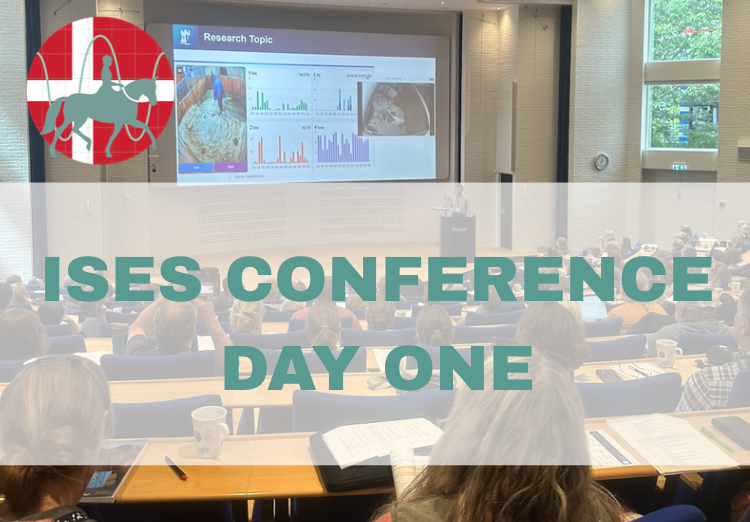
Day One of the ISES 2026 Conference in Billund brought together research exploring the horse from multiple perspectives, from their place in natural ecosystems and the environments we provide, to sleep, movement, pain, social relationships and even the biodiversity living within them.
Here are just some of the highlights from a packed first day.
We began with our Clever Hans presentation, where Professor Jens Christian Svenning explored The nature of horses and horses in nature. Drawing on evolutionary history, ecology and rewilding, he considered horses not simply as domestic animals returned to the wild, but as a re emerging wild species capable of shaping vegetation, biodiversity and future ecosystems.
Professor Janne Winther Christensen followed with research on around 150 feral horses in Danish nature restoration projects. The horses spent approximately 63% of their daytime foraging, while seasonal differences were also seen in affiliative behaviour, reinforcing the importance of varied foraging, movement and social opportunities.
Jennifer Korterink then explored what living alongside wolves means for horses and their caregivers in the Netherlands. Wolf presence influenced everyday decisions around turnout, fencing, supervision and riding routes, while raising wider questions around responsibility and acceptable risk.
Our first plenary, delivered by Cristina Luz Wilkins, introduced the application of the teleonome in equitation science. The presentation challenged us to move beyond asking whether horses are simply coping and instead consider what they are biologically organised to value, seek and respond to.
Dr Susie Catherall Ostler then put language under the spotlight, showing that describing horses using terms such as “naughty” or “stubborn” can influence the responses people choose, including increasing the likelihood of suggesting sedation or positive punishment.
Dr Jo Hockenhull explored “welfare washing”, asking whether changes within equestrianism genuinely improve horses’ lives or simply improve public perception. A proposed framework considers the impact of changes on horses, equestrians and the wider public.
After lunch, sleep became a major theme. Dr Marianne Cockburn presented striking findings showing a long term decline in recumbency after horses were relocated to a new group housing system, despite that system exceeding legal welfare requirements. Michaela Schulz then explored whether dominance and compatibility within established groups affected lying behaviour, finding no clear relationship.
Dr Brad Hill showed how 24 hour computer vision monitoring can reveal what horses are doing when humans are not there to observe them, from identifying abnormal sleep patterns to monitoring responses following vaccination and international travel.
Dr Miriam Baumgartner demonstrated how strongly movement can be shaped by housing design, management and environmental conditions, while Professor Inga Wolframm showed that turnout spaces with greater structural variety can provide horses with more meaningful choices about where to eat, rest and move.
Essi Wallenius explored the relationship between body injuries, use related pain and conflict behaviour during tacking, finding that conflict behaviour became more common as indicators of mouth and back pain increased.
The afternoon then turned to young horses and social relationships. Heli Suomala presented findings on foal weaning practices in Finland, while Dr Maria Diez Leon highlighted the potential welfare impact of early, abrupt weaning on mares. Dr Claire Ricci Bonot followed with work developing a clearer framework for understanding separation anxiety in horses, including the different contexts in which it may occur and the importance of who the horse is being separated from.
Finally, our second plenary, delivered by Professor Martin Krarup Nielsen, took us inside the horse itself.
The internal biodiversity of the horse explored the remarkable diversity of equine parasites and the need to rethink traditional parasite control. With widespread anthelmintic resistance and no new drug classes expected in the foreseeable future, the future may depend on smarter surveillance, better diagnostics, pasture management and a deeper understanding of the relationships between parasites and the wider gut microbiome.
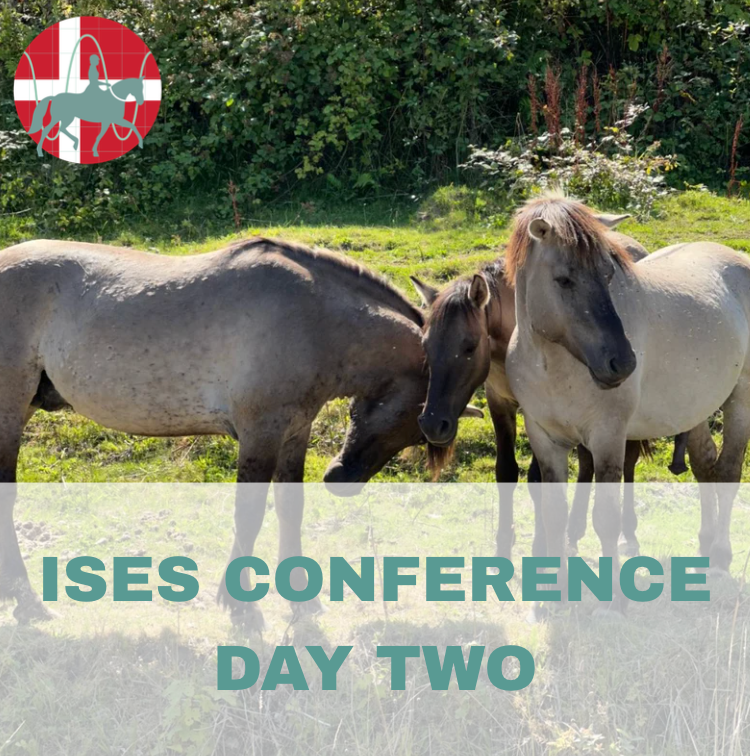
Day Two of the ISES 2026 Conference brought together research exploring two major areas of equine welfare: meeting horses’ nutritional and behavioural needs, and recognising, understanding and responding to pain.
The day began with Rasmus Bovbjerg Jensen, who explored meeting the foraging needs of obese horses. Restricting energy intake can be necessary for metabolic health, but horses remain strongly motivated to forage. The challenge is therefore not simply reducing calories, but finding management strategies that protect physical health while still meeting behavioural needs.
Ella Bradshaw-Wiley asked whether horses will work for forage when the same food is freely available. When 36 mares were offered free lucerne hay alongside identical hay from a feeder requiring effort, they spent significantly more time eating the freely available forage. However, individual differences were considerable, suggesting that effort-based feeding enrichment may be valuable for some horses but should not replace free access to forage.
Liane Preshaw explored the challenges of equine weight management within a welfare charity. Caregivers raised concerns that some interventions could contribute to hunger, frustration and behavioural problems. The findings emphasised the importance of considering mental wellbeing alongside physical measures of weight and involving those caring for horses when developing management strategies.
Dr Fabienne Eichler presented a two-year study examining how Thoroughbred behaviour changes from yearling to racehorse. As workload increased, horses rested more and spent more time eating concentrate, while time spent eating roughage decreased markedly. This reduction in roughage intake as training intensified warrants further investigation for its potential health and welfare implications.
The afternoon turned to pain, beginning with Prof. Dr Machteld van Dierendonck and developing a more consistent approach to equine pain assessment. With numerous pain scales available but no universal gold standard, the expert Havemeyer Working Group identified the Equine Pain Scale (EPS) as the most pragmatic option for wider use. It assesses nine categories spanning facial expression, behaviour, posture and interaction with people and the environment.
Prof. Dr Frauke Musial then asked how bit pressures might compare with human pain thresholds. Comparing calculated bit pressures with established human pressure pain thresholds suggested that only the lowest estimated pressures would fall below human pain thresholds. Importantly, the presentation distinguished between detecting pain and tolerating it: the fact that an animal tolerates pressure does not mean that pressure is pain free.
Can we become better at recognising equine pain? Debby Gudden investigated whether education can improve recognition of equine facial expressions of pain. After just a 40-minute educational lecture, participants changed how they visually assessed horses’ faces and became significantly more accurate at rating pain. Rather than concentrating predominantly on the eyes, they began considering the ears, mouth and nostrils more systematically.
Dr Johan Lundblad explored whether behaviour can distinguish physical pain from other forms of discomfort. Horses experiencing temporary nociceptive discomfort showed increased pawing, while social isolation produced greater vigilance, including higher head positions and more looking behaviour. The findings demonstrate the importance of considering specific behaviours and their context when determining why a horse may be uncomfortable.
Finally, Marc Beaussart investigated the relationship between back pain and spinal movement in Thoroughbred horseball horses. Combining pressure measurements with motion sensors revealed region-specific relationships between back sensitivity and spinal mobility, particularly across the caudal thoracic and lumbo-sacral regions. This could contribute towards more objective approaches to identifying and monitoring back pain and rehabilitation.
Across both sessions, one message stood out: equine welfare cannot be understood through a single measure. Whether managing bodyweight, interpreting behaviour or assessing pain, we need to consider the whole horse, including physical health, behaviour, emotional state and environment.
An afternoon beyond the conference
Wednesday afternoon also gave delegates the opportunity to step outside the conference venue and explore some of what Denmark has to offer through a range of optional excursions.
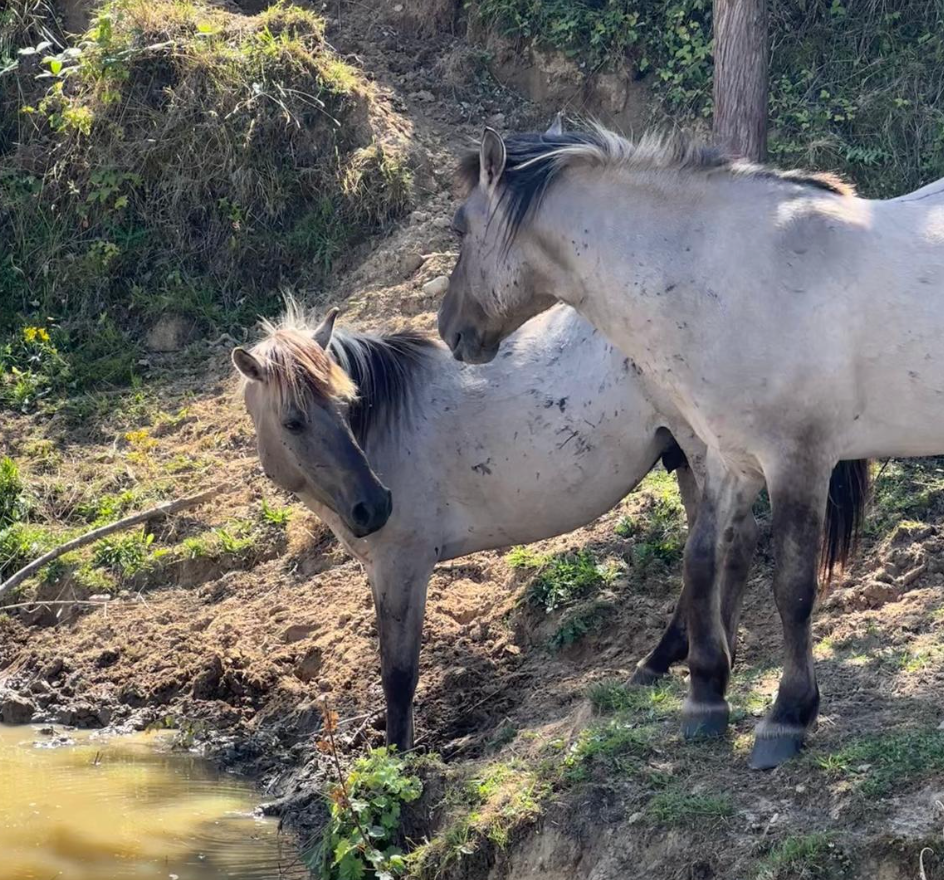
With eight different options, delegates could visit free-living and extensively managed horses, including Konik horses, Exmoor ponies and Icelandic horses, and see first-hand how equids are being used in rewilding, biodiversity restoration and landscape management.
Other excursions explored alternative approaches to horse keeping and meeting horses’ behavioural needs, while delegates visiting Givskud Zoo had the opportunity to see Przewalski’s horses. Others explored Denmark’s Viking history at Kongernes Jelling, or made the most of being in the home of LEGO with an afternoon at LEGOLAND Billund.
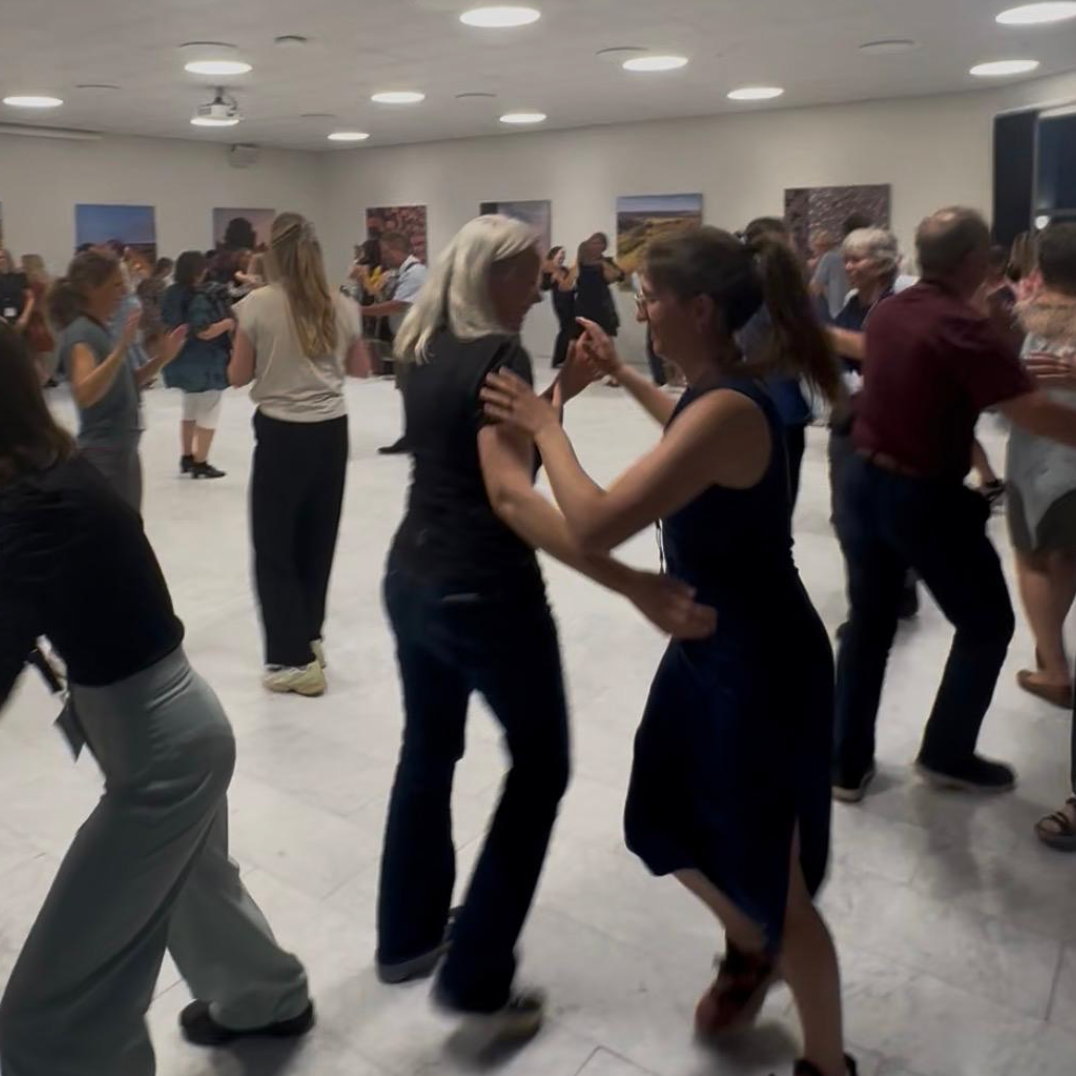
The day then came back together for the conference dinner, followed by traditional Danish dancing, giving delegates a chance to experience a little more Danish culture while catching up with friends and colleagues from across the international ISES community.
Day Three of the ISES 2026 Conference brought the meeting to a close with research spanning riding school welfare, equipment and communication, learning and affective state, working equids, training, movement and positive human–horse interactions.
Lisa Ashton began by introducing the ABRS+ Riding School Futures Project, which brings evidence-based equine welfare directly into operational riding schools. Built around the question “What is the horse experiencing?”, the project uses frameworks including the Five Domains Model and ISES First Principles to support changes in staff understanding, training and everyday management, while recognising that horse welfare and sustainable riding schools can work together.
Prof. Paul McGreevy introduced the COMPASS Guidelines, a new research standard specifically addressing studies involving behaviour modification and equipment. The guidelines aim to strengthen study design, biological grounding and ethical rigour while helping research translate more effectively into practice.
Prof. Dr. Uta König von Borstel presented data from more than 6,000 Icelandic horse competition starts. Cavessons incorporating a lower noseband were associated with a greater likelihood of oral lesions, while the large dataset also allowed relationships with bit design and lower-limb lesions to be explored.
Dr. Kathrin Kienapfel-Henseleit explored equipment use and conflict-related behaviour in Standardbred trotters. Equipment changed substantially between warm-up and pre-race phases, alongside increased head movements, while less restrictive equipment tended to be associated with better race placing.
Susanne Lundesjö Kvart compared riders’ perceptions when using snaffle and sidepull bitless bridles. Bitted bridles were generally perceived as providing clearer, more precise communication, whereas bitless riding increased awareness of seat and leg aids and was associated with greater perceived relaxation in some horses.
The programme then moved into learning and affective state.
Dr. Cathrynne Henshall investigated how reward learning and changes in expected rewards may influence mood in Thoroughbreds. The findings provided preliminary evidence that learning experiences can influence horses’ subsequent affective states, suggesting that learning is not emotionally neutral and may leave an emotional footprint beyond the training session.
Dr. Camie Heleski explored human judgement of equine emotional states as a foundation for developing AI welfare assessment tools. Agreement was strongest when identifying negative affective states, while neutral states were substantially harder for people to classify consistently, highlighting an important challenge when creating reliable datasets for AI.
Dr. Johanna Henke-von Der Malsburg asked whether horses can “learn to learn.” Horses taught several negative reinforcement tasks in parallel did not learn their original task less effectively and appeared to acquire additional tasks more efficiently, suggesting structured task variation may facilitate learning rather than cause confusion.
Lara Klitzing investigated young Thoroughbreds before and after a 12-week pre-training programme. Horses became more active and exploratory after training, while individual differences became more pronounced, demonstrating why novel object responses should be interpreted using multiple behavioural measures rather than a single indicator.
Dr. Franziska Pilger compared physiological stress responses to pre-training events in yearling and two-year-old Thoroughbred fillies. Yearlings did not experience the carefully conducted programme as more physiologically stressful than two-year-olds, providing no evidence of a stress-related benefit from delaying pre-training by one year.
Debora Cinganelli investigated whether social companionship could buffer horses’ responses to a novel stressor. Horses accompanied by either a familiar human or a familiar horse had lower heart rate and cortisol responses than horses facing the stressor alone, providing evidence for both inter- and intra-specific social facilitation.
Prof. Dr. Kathalijne Visser compared horses following therapeutic and conventional riding lessons using cognitive and physiological measures. Therapeutic riding produced no evidence of a more negative affective state and was associated with lower physiological arousal, although differences in physical workload may contribute to the physiological findings.
The afternoon moved into working equids and free papers.
Pantaleo Gemma assessed 100 working horses in Bishoftu, Ethiopia, alongside their owners’ knowledge and attitudes. Despite generally positive owner perceptions, lack of water and shade, skin problems and rough handling revealed important differences between perceived and observed welfare.
Dr. Mactar Seck presented Brooke West Africa’s Compassionate Handling Project in Senegal. Through management changes, positive reinforcement, systematic desensitisation and other compassionate approaches, challenging behaviour disappeared in 70% of cases, while 79% of owners showed positive changes in their own behaviour.
Lina Nyberg explored how experienced harness racing trainers and drivers understand driveability. Participants described a driveable horse as calm but alert and responsive, with calm, progressive training viewed as important for welfare and performance. Driveability emerged as something shaped by the horse, driver, training and context, rather than simply a fixed characteristic of the horse.
Dr. Renata Farinelli Siqueira challenged the assumption that locomotor asymmetry necessarily represents dysfunction. Different Quarter Horse disciplines showed repeatable discipline-specific patterns of asymmetry, suggesting that some lateralised movement may represent functional adaptation to athletic demands rather than pathology.
Dr. Sophie Côté presented preliminary work exploring memory reconsolidation as an intervention for established stereotypic behaviours. Stereotypic behaviours reportedly ceased across 25 behavioural targets following an average of approximately four sessions, although controlled research is needed to establish the effectiveness of the approach.
Finally, Taru Niittynen explored whether horses experience scratching differently depending on who provides it. Horses showed more behavioural indicators associated with enjoyment when scratched by familiar people, while privately owned horses initiated more contact with humans than riding school horses. Biomarkers including oxytocin and cortisol were also being investigated to explore whether behavioural responses are reflected physiologically.
Across the final day, a common theme emerged: understanding horse welfare requires asking not only what humans are doing, but how the horse experiences it. From riding schools and competition equipment to learning, social support, working equids and even scratching, Day Three demonstrated how equitation science can translate that question into practical changes for horses and the people who work with them.
And with that, ISES 2026 came to a close, but not before one final announcement: the ISES International Conference will be heading to Portugal in 2027! 🇵🇹
